Finding the right diesel tank trailer for sale involves more than comparing tank capacity and price. The trailer must suit the towing vehicle, operating environment, refuelling equipment and applicable transport requirements. A unit designed for controlled movement around a farm or construction site may differ significantly from one intended for regular use on public roads.
M&M Fabrication manufactures fuel bowser trailers in South Africa for customers who need a practical way to transport and dispense diesel. These units are commonly used in agriculture, construction, plant hire, mining support, generator servicing and other operations where machinery cannot conveniently travel to a filling station.
This guide explains the main specifications to assess, questions to ask a manufacturer and common purchasing mistakes to avoid before requesting a quotation.
What is a diesel tank trailer?
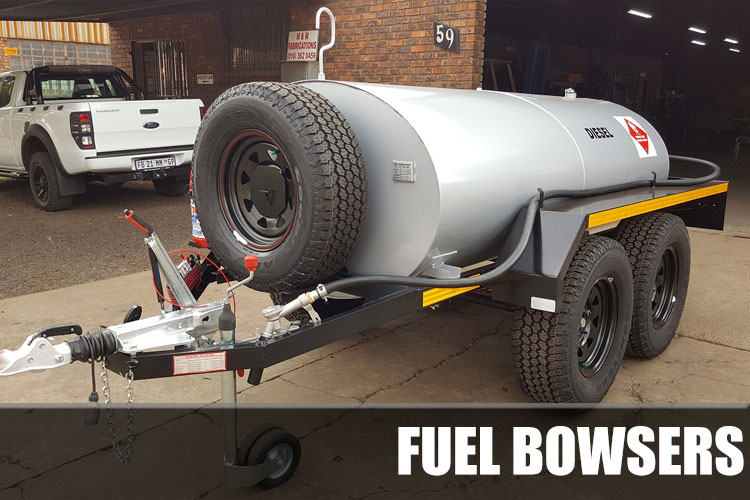
A diesel tank trailer, also called a diesel bowser or fuel bowser trailer, is a towable tank system used to transport and dispense diesel. Depending on its intended use, it can incorporate a chassis, axle or axles, road wheels, mudguards, a drawbar, jockey wheel, tank fittings, pumping equipment, hose and dispensing nozzle.
The terms “diesel trailer” and “diesel bowser” are often used interchangeably. However, buyers need to establish exactly what is included. A basic tank-on-trailer configuration is not necessarily a complete mobile refuelling system. Pump type, hose length, filtration, metering, electrical connections and security features can all affect how useful the trailer is in daily operation.
A purpose-built bowser gives operators control over fuel delivery to equipment such as tractors, excavators, loaders, graders, generators and pumps. It can reduce unnecessary machine travel and allow refuelling to take place closer to the work area, subject to safe operating procedures and site rules.
How to choose a diesel tank trailer for sale
The best trailer is not automatically the largest one available. Capacity, payload, chassis design and dispensing equipment need to work as a complete system. Begin with the intended application and work backwards to the required specification.
Choose capacity according to actual fuel use
Estimate how much diesel your equipment consumes between planned refuelling trips. Include enough working capacity for normal demand, but avoid selecting an oversized tank simply to reduce the number of journeys.
A larger tank increases the potential payload and can require a heavier-duty chassis, axle arrangement, braking system and towing vehicle. It can also be less manoeuvrable on narrow farm roads, congested building sites or uneven access routes.
Useful questions include:
- How many machines will the trailer refuel during a normal shift?
- What is the combined daily or weekly diesel requirement?
- How far will the trailer travel between the fuel source and operating site?
- Will it travel on public roads, private land or both?
- Is there enough space to turn, park and operate the trailer safely?
Diesel contributes substantial weight to a loaded unit, so capacity cannot be considered separately from the trailer’s rated carrying ability. Ask for the trailer’s tare, permissible load and relevant mass ratings, then confirm that the towing vehicle is suitable for the fully loaded combination.
Match the trailer to the towing vehicle
The tow vehicle must be rated for the trailer’s actual loaded mass. Its towbar, coupling, electrical connection and braking compatibility also need to suit the trailer configuration.
Do not base the decision on engine power alone. Manufacturer towing limits, gross combination mass, towball or coupling limits and braking requirements all affect suitability. The legal and mechanical limits stated for the tow vehicle remain relevant even if the vehicle appears capable of pulling the load on level ground.
This is particularly important in Gauteng, where a trailer may move between industrial premises, construction sites and busy public roads in a single day. Stop-start traffic, sloping site entrances and short highway sections place different demands on the combination. Rural operations have their own challenges, including corrugations, soft ground and poor turning space.
Assess the chassis, axle and suspension
A fuel bowser chassis carries a concentrated and changing load. Examine how the tank is supported and secured, as well as the suitability of the axle, suspension, wheels, tyres, coupling and drawbar.
Single-axle units can be compact and easy to manoeuvre in appropriate applications. Tandem-axle configurations can offer different load-carrying and stability characteristics, but they also add components and may require more space when turning. Selection needs to be based on capacity, mass distribution and operating conditions rather than appearance.
Ask the manufacturer how the intended terrain affects the specification. A trailer used mainly on paved roads has a different duty cycle from one repeatedly towed over farm tracks or construction-site surfaces. “Off-road” also needs clarification: it can mean occasional movement on graded gravel, not unrestricted towing through severe terrain.
Confirm whether brakes are required
Braking arrangements depend on the trailer’s mass, design and intended operation. Do not assume that a small-looking fuel trailer can be used safely or legally without brakes.
Confirm the loaded mass and discuss the appropriate braking configuration with the manufacturer. The towing vehicle and trailer need compatible systems, and operators need to understand the checks required before departure. Tyres, wheel bearings, lights and coupling security are equally important because fuel transportation leaves little room for neglected maintenance.
Selecting the right diesel dispensing equipment
A good tank and chassis can still be frustrating to use if the pumping system does not match the job. Consider where power will come from, how quickly equipment needs to be refuelled and how accurately fuel use must be recorded.
Manual and powered pumps
Manual pumps can suit low-volume or occasional dispensing where simplicity is the priority. Powered pumps are generally more practical for frequent refuelling or larger machinery. Depending on the system, power may come from a suitable battery or vehicle electrical supply.
Ask about expected flow under realistic conditions. Pump ratings can be affected by hose length, lift, filter condition, electrical supply and fuel viscosity. A quoted maximum flow figure does not always represent the rate achieved at the nozzle in normal use.
Hoses, nozzles, meters and filters
The hose needs to reach the machine’s filling point without being dragged across sharp edges or creating a trip hazard. It must also be suitable for use with diesel. A practical storage arrangement helps prevent damage and keeps the hose cleaner between uses.
An automatic shut-off nozzle can make dispensing easier where it is compatible with the receiving equipment. A meter may assist businesses that allocate fuel costs to specific machines, teams or projects. Meter selection and calibration requirements should be discussed if the readings will be used for formal stock control or billing.
Filtration can help protect the fuel system from unwanted contamination, but a filter is not a substitute for clean filling practices and proper tank management. Ask where the filter is fitted, which replacement element is required and how easily it can be inspected and changed.
Tank construction and practical design details
The tank needs to be designed for its intended contents and operating conditions. Buyers should ask about the tank material, fabrication method, mounting arrangement, filling point, venting, outlet protection and access for maintenance.
Baffles are commonly used to manage liquid movement inside mobile tanks. As the trailer accelerates, brakes or turns, the fuel moves and changes the forces acting on the towing combination. Internal design therefore matters, especially when the tank is only partly full. Drivers must still adjust their speed and following distance because baffles do not eliminate liquid surge.
Other practical details worth discussing include:
- A protected and accessible filling point
- A lockable cap or enclosure where fuel security is a concern
- Safe storage for the dispensing hose and nozzle
- Protection for pumps, meters and exposed fittings
- A jockey wheel or support arrangement appropriate to the loaded drawbar weight
- Clearly positioned lights and reflectors for road-going applications
- Drainage and inspection access suited to the tank design
- Provision for safely isolating the dispensing system
Security deserves attention if the trailer will stand overnight on a farm, depot or building site. Locks and enclosed equipment can discourage opportunistic access, but operating controls, key management and fuel reconciliation remain necessary.
Road use, dangerous goods and site compliance
Diesel transportation in South Africa is subject to safety and legal requirements. The exact obligations depend on factors such as the quantity transported, trailer configuration, route, vehicle category and whether transport takes place on a public road or within a controlled site.
Relevant requirements can involve vehicle registration and roadworthiness, driver eligibility, dangerous-goods transport provisions, documentation, placarding, emergency information, fire extinguishers and operating procedures. Applicable national legislation, regulations and South African National Standards can change, and exemptions or thresholds may apply in defined circumstances.
Buyers should obtain current guidance from the appropriate authorities or a qualified dangerous-goods adviser before putting a trailer into service. A manufacturer can explain the equipment specification, but the operator remains responsible for confirming how transport rules apply to the planned use.
Site requirements may be stricter than general road rules. Mines, construction companies, industrial plants and agricultural businesses can have their own induction, inspection and refuelling procedures. Ask the end customer or site manager for these requirements before ordering the trailer, not after delivery.
Petrol should not be treated as interchangeable with diesel. The fuels have different hazard characteristics, and equipment intended for one product is not automatically suitable for the other. Tell the manufacturer exactly which fuel will be carried and never change the product without confirming compatibility and compliance.
Safe operation starts before the trailer moves
A suitable trailer still relies on disciplined operation. Drivers and refuelling personnel need training appropriate to their responsibilities, equipment and legal obligations.
A pre-use inspection should cover the coupling, safety connections, tyres, wheel condition, lights, brakes where fitted, tank mountings, visible leaks, valves, hose, nozzle and pump. Any defect that could affect safe transport or fuel containment needs attention before departure.
During refuelling, the trailer should be positioned on stable ground away from avoidable ignition sources and uncontrolled traffic. Apply the towing vehicle’s parking brake, secure the combination as required and prevent unauthorised operation. Follow the equipment instructions for bonding, earthing or other static-control measures where applicable to the installation and site procedure.
Keep suitable spill-response materials available according to the risk assessment. Operators should know how to stop the pump, isolate the fuel flow and report or contain a spill without exposing themselves to unnecessary danger. Contaminated material and recovered fuel need to be handled in line with environmental and site requirements.
Common mistakes when buying a fuel bowser trailer
Several purchasing errors only become apparent once the unit is working in the field:
- Buying on tank capacity alone: The chassis rating, loaded mass, brakes and towing vehicle matter just as much.
- Failing to define road use: A site trailer and a road-going trailer may require different equipment and documentation.
- Ignoring dispensing speed: A pump that is adequate for one tractor may delay a fleet of high-consumption machines.
- Choosing a hose that is too short: Operators then reposition the trailer repeatedly or stretch the hose unsafely.
- Forgetting maintenance access: Filters, valves, bearings and pumping components need to be reached for inspection and service.
- Assuming diesel and petrol systems are interchangeable: The intended fuel must be specified before manufacture.
- Ordering before checking site rules: A customer or principal contractor may require specific safety equipment or documentation.
- Overlooking the tow vehicle: An unsuitable towing combination cannot be corrected by cautious driving.
A written operating brief helps prevent these problems. Include the fuel type, preferred capacity, towing vehicle, road-use requirement, terrain, expected dispensing frequency and any site-specific specifications when asking for a quotation.
New diesel bowser versus a used trailer
A used diesel bowser can appear economical, but its history needs careful assessment. Corrosion, impact damage, poor repairs, degraded hoses, worn couplings and unknown modifications can add cost and risk. Confirm what fuel was previously carried and whether the tank has been contaminated or altered.
Inspect the chassis, welds, mountings, axle, suspension, brakes, wheel bearings, tyres, pump and electrical installation. Documentation and identification details also need to correspond with the physical trailer. A general visual check is not a substitute for assessment by a competent person.
Buying new makes it easier to specify the unit around the application instead of adapting operations to an existing trailer. It also allows the buyer to discuss capacity, pumping equipment and trailer configuration with the manufacturer before production. The right choice depends on condition, traceable history, intended duty and the true cost of bringing a used unit up to the required standard.
Related mobile tank options
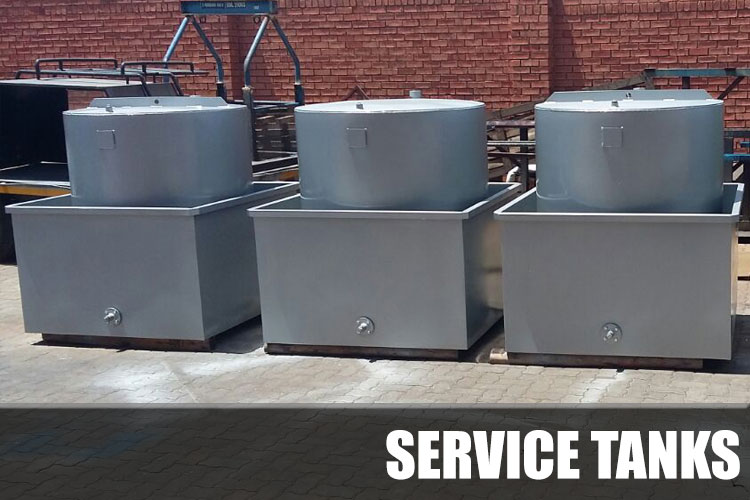
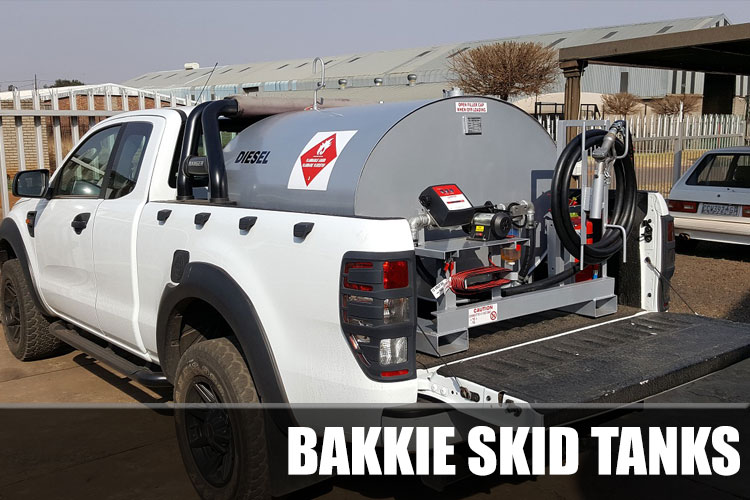
A trailer is not the only way to carry fuel. Operations using a bakkie or service vehicle may find a removable or vehicle-mounted tank more practical for certain routes. M&M Fabrication’s bakkie skid tank range provides another format to consider, while service tanks can suit mobile support applications.
For diesel trailer requirements, review the available fuel bowser trailer range and discuss the intended operating conditions before selecting a model. Businesses that transport aviation gasoline need equipment designed for that specific application and can view the Avgas trailer range.
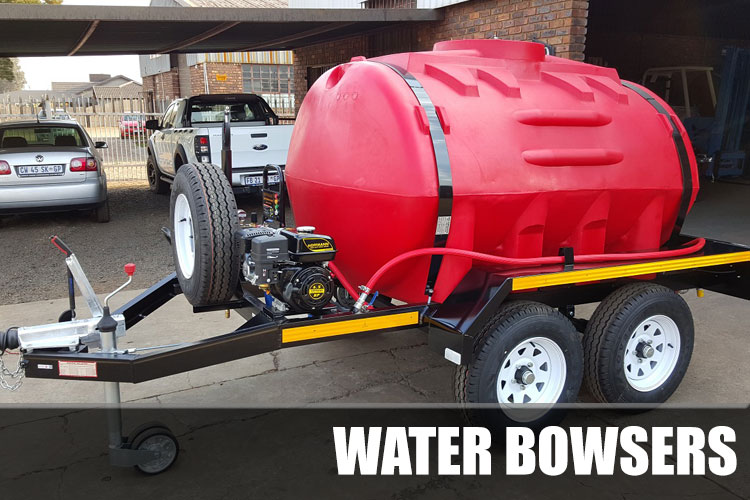
M&M Fabrication also manufactures water bowser trailers and fire-fighting trailers. Fuel, water and fire-fighting units serve different purposes and must not be treated as interchangeable tanks.
Information to provide when requesting a quote
A clear enquiry helps the manufacturer recommend a more relevant configuration. Provide as much of the following information as possible:
- The required diesel capacity or estimated daily fuel demand
- The make, model and rated towing capacity of the intended tow vehicle
- Whether the trailer will operate on public roads, private property or both
- The normal terrain and travel distance
- The number and type of machines being refuelled
- The preferred manual or powered pumping arrangement
- Any need for a meter, filter, longer hose or equipment enclosure
- Site, client or procurement specifications that need to be considered
- The delivery location in Gauteng or elsewhere in South Africa
Do not rely on a request such as “quote on a 1,000-litre bowser” without explaining the application. Two customers asking for the same nominal tank capacity can need different chassis, dispensing and operating configurations.
Frequently asked questions
What size diesel tank trailer do I need?
Calculate the fuel required between replenishment trips, then assess the resulting loaded mass against the trailer design and towing vehicle limits. Also consider access, turning space, terrain and refuelling frequency. The most useful capacity is one that meets operational demand without creating an unsuitable towing combination.
Can a diesel bowser trailer be used on public roads?
It can only be used on public roads if the trailer, towing combination, equipment, documentation and operation meet the requirements applicable to that specific use. Fuel quantity, trailer mass and dangerous-goods provisions can affect what is required. Confirm current obligations with the relevant authorities or a qualified adviser before operation.
Can I use the same trailer for diesel and petrol?
Do not assume that a diesel system is suitable for petrol. Petrol has different hazard and equipment requirements. Specify the intended fuel when ordering and obtain professional confirmation before changing a tank’s contents or service.
Request a diesel tank trailer quotation from M&M Fabrication
A diesel bowser needs to fit the load, tow vehicle, route and refuelling task. M&M Fabrication manufactures water and fuel bowser trailers in South Africa and can discuss a configuration based on your operating requirements.
If you need a diesel tank trailer for sale, send M&M Fabrication the required capacity, towing vehicle details, intended road use, terrain and dispensing preferences. Request a diesel bowser quotation and get direct guidance on the equipment options relevant to your application.