Fire fighting equipment for farmers needs to suit the realities of agricultural land: long distances, rough tracks, limited water points, dry vegetation and machinery operating far from the main buildings. A small fire can spread quickly through crop residue or winter veld, so the equipment must be ready to move, simple to operate and matched to the likely fire risk.
For South African farmers, a mobile water supply is often the backbone of a farm fire response plan. A properly specified fire fighting trailer can carry water to areas that fixed hydrants, tanks and conventional fire engines cannot easily reach. It does not replace the local fire service, a fire protection association or trained responders, but it can help workers attack a manageable fire early, protect exposed property and supply water while additional assistance is on the way.
This guide explains the main equipment options, how to choose a suitable trailer and pump, and what needs to be checked before the dry season begins.
What fire fighting equipment does a farm need?
The right combination depends on the farm’s crops, vegetation, buildings, machinery, fuel storage and access routes. A grain operation with extensive stubble faces different risks from a livestock farm, an orchard or a mixed enterprise with workshops and diesel storage.
A practical farm fire kit often includes:
- A mobile water tank or dedicated fire fighting trailer
- A pump suited to the required flow, pressure and hose length
- Fire hose, hose reels and adjustable nozzles
- Fire beaters and hand tools for grass and veld fires
- Appropriate portable fire extinguishers for vehicles, workshops and buildings
- Personal protective equipment for trained workers
- Reliable communication equipment
- A written response plan with emergency contacts and access information
No single item covers every incident. Water is effective on many ordinary combustible materials, including grass, crop residue and timber, but it is not the correct extinguishing medium for every fuel, chemical or energised electrical fire. Suitable extinguishers and trained personnel are still needed around workshops, electrical installations, fuel stores and machinery.
Why mobile fire fighting equipment is valuable on agricultural land
Farm fires rarely start next to the main water supply. They can begin beside a public road, under harvesting equipment, near a pump station or in a remote camp. A trailer allows water, hose and a pump to be moved closer to the incident instead of relying on very long hose runs or small portable containers.
Mobility is especially valuable across the Gauteng Highveld and neighbouring summer-rainfall regions. Winter grass can become dry and highly combustible, while open ground gives wind room to push a veld fire rapidly across a boundary. Smoke can also reduce visibility on farm roads, making rushed towing dangerous. Equipment therefore needs to be positioned early and operated within safe limits.
A mobile unit can support several farm tasks outside emergencies, depending on its design. However, a trailer intended as the farm’s primary fire response unit needs to remain available and filled during high-risk periods. A water tank that is empty because it was used for another task offers no protection when an ignition occurs.
Choosing a fire fighting trailer for a farm
A useful fire fighting trailer for agricultural use is more than a tank mounted on wheels. Tank capacity, chassis design, pump performance, hose layout, towing conditions and access all affect how well the unit works during an emergency.
Tank capacity and available water
Capacity needs to balance fire response time with towing practicality. A larger tank provides a longer operating period, but water is heavy: one litre has a mass of approximately one kilogram before the weight of the tank, trailer, pump, hose and fittings is added.
The selected tow vehicle must be legally and mechanically suitable for the fully loaded trailer. Check the vehicle manufacturer’s towing limits, the trailer data, coupling, tyres and braking arrangement. Do not base the decision on empty trailer weight. The fully laden condition is what matters during an emergency.
Estimated run time can be assessed by comparing usable tank volume with pump discharge. Actual consumption changes with nozzle setting, pressure, hose arrangement and operating technique. A high-flow open nozzle can empty a modest tank surprisingly quickly. Controlled application, clear communication and the ability to refill nearby all improve useful operating time.
Pump pressure and flow
Flow and pressure are related but not interchangeable. Flow indicates how much water the pump can move, while pressure affects how the stream travels through the hose and nozzle. Long hose runs, elevation changes, small-diameter hose and fittings all create losses.
Before selecting a pump, consider:
- The likely hose length from the trailer to the fire edge
- The number and diameter of hoses
- The required nozzle pattern and reach
- Whether one or more outlets will operate at the same time
- How quickly the tank must be refilled
- The height difference between the pump, water source and discharge point
A pump specification viewed in isolation does not confirm performance at the nozzle. Discuss the complete arrangement, including suction plumbing, discharge fittings, hose and expected operating conditions.
Hose reels, loose hose and nozzles
A hose reel supports fast deployment and tidy storage, which is useful when seconds count. Loose lay-flat hose can provide greater reach but takes longer to deploy, drain and repack. Some farms benefit from a combination: a reel for rapid first response and additional hose for reaching beyond the trailer.
An adjustable nozzle gives the operator more control. A straight stream can provide reach, while a spray pattern can assist with wetting nearby vegetation and cooling exposed surfaces. Operators need to know how each pattern behaves in wind. Fine spray can drift away from the target, particularly in exposed fields.
Tank stability and water movement
Partly filled tanks can produce liquid surge as the trailer turns, brakes or travels over uneven ground. This movement affects stability and stopping distance. Internal baffling, suitable tank mounting and a chassis designed for the load are therefore important considerations.
Drivers must still slow down and avoid abrupt steering. Baffles reduce water movement; they do not make a heavily loaded trailer handle like an empty one. Rough farm tracks, erosion channels, soft soil and steep contours need to be considered during route planning.
Refilling arrangements
A fire trailer is only as useful as its water supply. Identify reliable filling points before an emergency and confirm that couplings, suction hoses and access routes are compatible with the unit. Possible sources include dedicated storage tanks, suitable dams, reservoirs or fixed farm water infrastructure, subject to water quality and pump capability.
Dirty water can block strainers, damage pumps or obstruct nozzles. If open water sources may be used, discuss filtration and suction requirements when the equipment is specified. Never assume that a pump can lift water from any depth or through any hose arrangement.
Water bowsers compared with dedicated fire fighting trailers
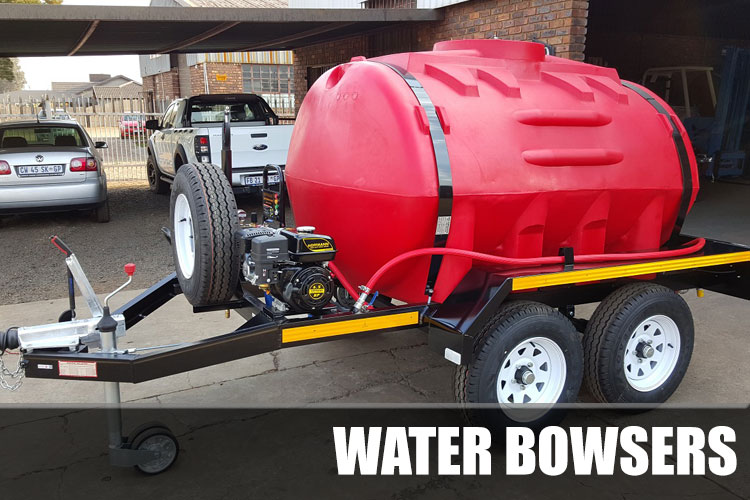
A general-purpose water bowser transports water and can be valuable for dust suppression, livestock support, construction and other farm work. A dedicated fire fighting unit is configured around rapid response, with a suitable pump, accessible controls, hose storage and discharge equipment.
Farmers comparing options can review M&M Fabrication’s water bowser trailer range alongside its dedicated fire trailer options. The best choice depends on how the unit will be used and how quickly it must be deployed.
If a multipurpose bowser is expected to support fire response, confirm that its pump, outlets, hose and nozzle are suitable. Keep the required equipment with the trailer, and establish rules for tank availability during periods of elevated fire danger. A dedicated unit reduces the risk of finding that the bowser is empty, disconnected or working elsewhere on the property.
Hand tools and portable equipment for veld fires
Not every fire edge is best approached with a water stream. Trained teams often use hand tools to deal with short flames, smouldering material and accessible hotspots. Fire beaters, rakes, spades and knapsack sprayers can support a mobile water unit, particularly where vehicles cannot travel.
These tools must be used by people who understand escape routes, wind changes and the limits of direct attack. Workers should never be sent into tall flames, dense smoke or terrain where they can be cut off. A shift in wind direction can turn a safe-looking position into a trap within moments.
Protective clothing needs to cover exposed skin without introducing materials that melt readily under heat. Suitable boots, gloves, eye protection and respiratory considerations form part of the risk assessment. Ordinary dust masks do not make heavy smoke safe to enter.
Fire extinguishers for machinery, workshops and fuel areas
Tractors, harvesters, generators and other equipment can ignite dry plant material through hot surfaces, electrical faults or mechanical failures. Machinery must be cleaned and maintained according to its manufacturer’s instructions, especially where chaff and dust collect around hot components.
Portable extinguishers need to be selected for the specific hazards present. Water-based equipment must not be applied indiscriminately to burning fuel or live electrical equipment. Extinguisher type, placement, inspection and servicing should be addressed with a competent fire equipment provider.
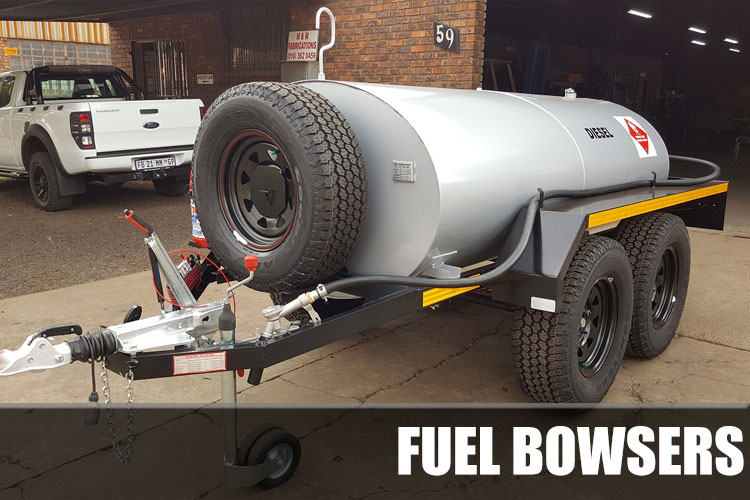
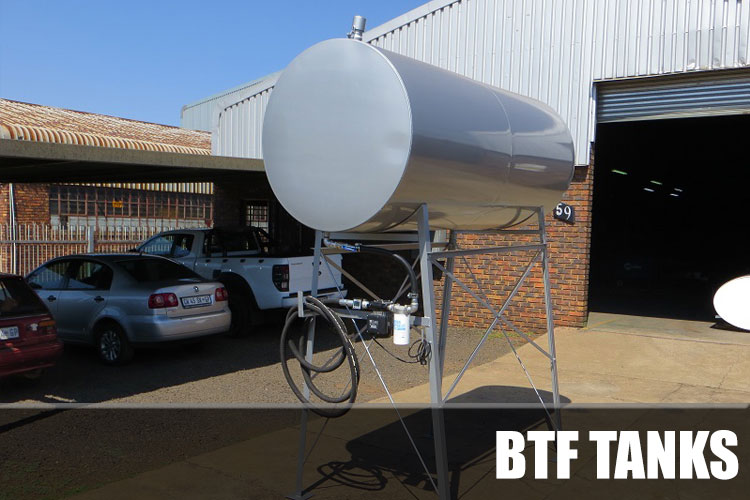
Fuel storage and transfer areas require particular care. M&M Fabrication manufactures diesel and fuel bowser trailers, but a fuel trailer and a fire fighting water trailer serve very different functions. Keep ignition sources controlled, maintain separation between fuel and active firefighting operations, and follow the relevant storage, transport and handling requirements for the product involved.
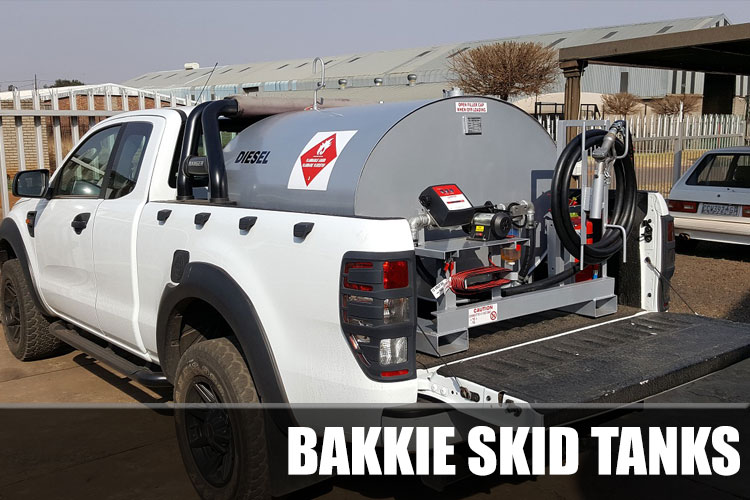
For operations that need mobile tanks mounted on a light commercial vehicle, bakkie skid tanks can also be considered for their intended applications. Payload, secure mounting and vehicle handling must be checked before any tank is installed or filled.
Plan access before a fire starts
Equipment alone does not create an effective response. Farms need a simple plan that workers can follow under pressure. Mark water points, locked gates, narrow bridges, steep tracks, overhead obstructions and areas where a loaded trailer cannot safely turn.
Keep gate keys and access instructions available to authorised staff. If emergency responders are called, nominate someone to meet them at an obvious entrance and guide them to the incident. Farm names, gate descriptions and local directions are often more useful on rural properties than a vague instruction to follow the smoke.
Coordination with neighbours and the local fire protection association can improve early warning and prevent several teams from working without a shared plan. Confirm contact details before the fire season and agree on how water supplies and access routes will be communicated.
A practical pre-season inspection checklist
Fire fighting equipment should be inspected and tested before dry conditions peak, then checked routinely while the risk remains high. A practical inspection includes:
- Fill the tank and check it, its mounting points, plumbing and valves for leaks.
- Start the pump according to the manufacturer’s procedure and test actual discharge through the hose and nozzle.
- Inspect hose for cracking, abrasion, damaged couplings and leaks.
- Confirm that hose reels rotate, lock and rewind correctly.
- Clean strainers and inspect suction equipment.
- Check tyres, wheel fasteners, bearings, brakes, lights, coupling and safety connections.
- Verify that the tow vehicle is suitable, fuelled and available.
- Inspect beaters, tools and protective equipment.
- Confirm that extinguishers are accessible and within their required inspection or service periods.
- Run a short drill so workers know who calls for help, who tows the trailer and who operates the pump.
Testing with water is better than assuming the unit works because the engine starts. A blocked nozzle, leaking coupling or incorrectly positioned valve often becomes obvious only when the complete system is operated.
Common mistakes that weaken farm fire readiness
- Buying on tank size alone: A large tank is not useful if the tow vehicle cannot move it safely or the pump cannot deliver water effectively.
- Leaving the tank partly filled: Reduced water volume shortens operating time and can increase noticeable surge during travel.
- Using unsuitable hose: Hose diameter, length and pressure rating affect performance and safety.
- Skipping operator training: Workers need to know the start-up sequence, valve positions, nozzle control and shutdown process.
- Driving directly into the fire area: A trailer needs a safe position with an escape route. Smoke, soft ground and changing wind can block departure.
- Neglecting maintenance: Old fuel in a pump engine, flat batteries, perished hose and seized valves can make equipment unusable.
- Treating water as suitable for every fire: Fuel, chemical and electrical hazards require specific methods and competent guidance.
Specify equipment around the farm, not a generic checklist
Before requesting a quotation, gather the information a manufacturer will need. This includes desired water capacity, towing vehicle, typical terrain, road use, filling source, expected hose length and the type of fire risk being addressed. Also consider where the unit will be stored and how quickly it can be connected and moved.
M&M Fabrication manufactures water bowser, fire fighting and fuel bowser trailers in South Africa. A clear description of the intended application helps the equipment configuration align with the farm’s operational needs rather than relying on tank capacity alone.
Frequently asked questions
What size fire fighting trailer does a farmer need?
There is no universal capacity. Base the decision on the available tow vehicle, travel distance, terrain, likely fire type, pump discharge and proximity of refill points. Calculate the fully loaded trailer mass and estimated operating time, then choose a combination that can be moved safely and replenished quickly.
Can an ordinary water bowser be used for firefighting?
It can support firefighting if its pump, hose, fittings and nozzle are suitable, and if the tank is filled and ready when needed. A dedicated fire fighting trailer is generally easier to deploy because the equipment is configured and stored for that task. Neither option makes water suitable for fuel, chemical or energised electrical fires.
How often should farm fire fighting equipment be tested?
Complete testing should take place before the local high-risk season and at regular intervals during it. The precise schedule depends on equipment instructions, use and storage conditions. Test the full water path from tank to nozzle, not only the pump engine, and inspect the trailer before each deployment.
Request a fire fighting trailer quotation from M&M Fabrication
Effective fire fighting equipment for farmers starts with the right tank, pump, hose arrangement and trailer for the property. Send M&M Fabrication your required capacity, tow vehicle details, terrain, water source and intended application. The team can use that information to discuss an appropriate trailer configuration.
Contact M&M Fabrication for a fire fighting trailer quotation and specify a mobile water unit suited to your South African farming operation.