
1000 litre diesel bowser for sale
September 3, 2026
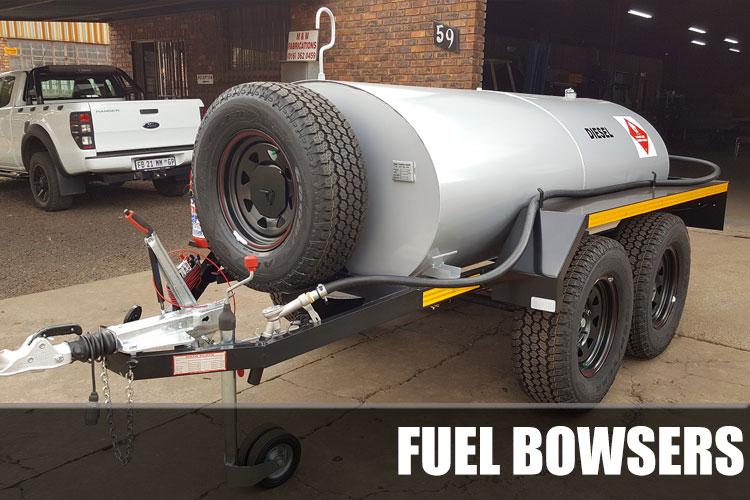
A 2000 litre diesel trailer for sale is usually intended for operations that need more fuel on site without relying on frequent trips to a filling station. Farms, construction contractors, plant-hire businesses, mines, municipalities and generator operators can use a mobile diesel bowser to refuel equipment where it is working.
Capacity alone does not determine whether a trailer is suitable. The tank construction, trailer rating, braking system, pump arrangement, filtration, hose layout and intended towing conditions all affect how well the unit will perform. A fully loaded 2 000-litre bowser is also a substantial piece of equipment, so payload calculations and tow-vehicle compatibility need attention before an order is placed.
This guide explains what to assess when comparing diesel bowser trailers in South Africa and what information to provide when requesting a quotation from M&M Fabrication.
What is a 2 000-litre diesel trailer?
A 2 000-litre diesel trailer combines a fuel tank with a road-going or site-oriented trailer chassis. Its purpose is to transport diesel and dispense it directly into machinery, vehicles, generators or other approved equipment.
The main components generally include the tank, chassis, axle or axles, wheels and tyres, drawbar, coupling, jockey wheel, mudguards, lighting, braking equipment and a dispensing system. Depending on the specification, the fuel-delivery equipment can include a pump, filter, meter, hose, nozzle and secure storage for dispensing accessories.
The exact configuration matters. A bowser used mainly on a farm does not face the same conditions as one travelling between construction sites in Gauteng traffic. Likewise, a trailer that remains within a controlled industrial site may have different operational requirements from one regularly used on public roads.
Buyers who want to compare other capacities and configurations can view M&M Fabrication’s diesel bowser and fuel trailer range.
Start with payload, not tank capacity alone
Two thousand litres describes the nominal liquid capacity, but it does not describe the total towing mass. Diesel typically weighs less than water, although its density varies according to temperature and fuel specification. As a useful planning estimate, 2 000 litres of diesel can weigh roughly 1 640 to 1 700 kilograms before the tank, chassis, pump, hoses and accessories are added.
The trailer’s loaded mass therefore needs to be calculated from several elements:
- the actual mass of the diesel being carried;
- the tare mass of the complete trailer;
- the pump, hose reel, meter, filter and other fitted equipment;
- tools, spare hoses or accessories carried on the trailer; and
- any residual fuel left in pipework or compartments.
Ask the manufacturer for the trailer’s tare, rated capacity and relevant mass information for the proposed build. The towing vehicle must be suitable for the loaded trailer, not merely capable of moving it while empty. The coupling, towbar, tyres, wheels, axles and braking system also have to suit the intended load.
This is particularly relevant for businesses operating around Gauteng. A trailer might cope with a short, flat yard movement but behave very differently during stop-start traffic, emergency braking or travel on uneven access roads around active developments and industrial areas.
Choosing the right trailer and tank configuration
Single-axle or tandem-axle layout
Axle selection depends on the complete trailer design, load distribution and operating conditions. A tandem-axle arrangement is often considered for larger-capacity trailers because it can distribute the load across more wheels. That does not automatically make every tandem trailer suitable for every route or tow vehicle.
Ask how the load is distributed, what the axle ratings are and how the drawbar load changes as fuel is dispensed. Correct balance matters because excessive or insufficient load at the coupling can affect stability. Buyers also need to consider turning space, tyre maintenance and the surfaces over which the bowser will travel.
Road use compared with controlled-site use
State clearly where the trailer will operate. If it will travel on public roads, the design and finished unit need to be assessed against the applicable South African vehicle, roadworthiness, licensing and dangerous-goods requirements. The obligations can depend on the vehicle combination, load, route and nature of the operation.
A site-only trailer may still need effective brakes, safe coupling arrangements and visible markings under the operator’s own safety procedures. Calling a unit “off-road” does not remove the physical risks associated with towing and dispensing a large quantity of diesel.
Because legal duties can vary, buyers should confirm the current requirements with the appropriate licensing authority, dangerous-goods adviser, insurer and health and safety personnel. The driver’s licence category and the tow vehicle’s approved towing capacity also require verification.
Tank construction and protection
The tank must be designed for the intended liquid and service conditions. Useful questions include how the tank is mounted, how movement is controlled, where the filling and venting points are located, and how exposed equipment is protected against impact or theft.
Internal liquid movement affects towing behaviour. Ask the manufacturer how fuel surge is managed in the proposed tank design, especially when the bowser will frequently travel partly full. A changing fuel level can alter the way the trailer reacts during cornering and braking.
Also inspect the position of valves and pipework. Low-mounted fittings can be vulnerable on rutted roads, kerbs and steep site entrances. Pump assemblies and hose connections benefit from sensible placement where operators can reach them without standing in traffic or climbing onto the trailer.
Specify a dispensing system that suits the work
A diesel trailer is only as useful as its dispensing setup. Pump choice should be based on the power source, required delivery rate, operating frequency and equipment being refuelled.
Pump power source
Electric pumps are commonly selected where a suitable battery or vehicle electrical supply is available. The electrical arrangement needs correctly sized cables, suitable connections and protection for the intended installation. A manual pump can provide a simpler option for lower-frequency use or serve as a contingency where appropriate.
Discuss how many machines will be filled during a typical shift and how far the bowser will be parked from them. A system intended to fill one small generator occasionally will differ from one used to service several items of earthmoving equipment each day.
Hose length and storage
A longer hose offers reach but also needs proper storage and handling. Loose hose can be damaged by vehicles, collect dirt or create a trip hazard. Depending on the specification, a hose reel or dedicated holder can keep it protected and make daily operation neater.
Choose hose length according to actual site access. If the trailer cannot park close to the equipment, explain this during the quotation process rather than adding unsuitable extensions later.
Filtration and metering
Fuel cleanliness is a major concern for modern diesel equipment. A filter suited to the dispensing system can help manage contaminants, but it still requires inspection and replacement according to the component supplier’s guidance. Filters are not a substitute for clean filling practices and proper tank maintenance.
A meter is useful where a business needs to record how much fuel is issued to a machine, project or department. Confirm whether the meter is intended for internal operational monitoring or another purpose. Where measurements are used for trade or billing, additional legal and calibration requirements may apply.
Nozzle and shut-off arrangements
The nozzle must be compatible with the hose, pump and receiving equipment. Discuss automatic shut-off, secure stowage and protection from contamination. Valves should be accessible during normal operation and in an emergency, but protected against accidental opening.
Practical safety features to discuss before ordering
Diesel is less volatile than petrol, but it remains combustible and spills can create fire, environmental and slip hazards. Safe operation depends on the trailer specification, operator training and the procedures used at the filling and dispensing points.
Items worth discussing with the manufacturer and your safety team include:
- secure closure and control of filling points;
- protected valves, hoses and pump fittings;
- appropriate ventilation for the tank design;
- safe isolation of the dispensing system;
- clear identification of the contents;
- space or mounting arrangements for suitable emergency equipment;
- earthing or bonding measures where required by the filling procedure and risk assessment;
- spill-control equipment and a documented response procedure; and
- lockable storage or anti-theft measures where the trailer is left unattended.
Never assume that the trailer specification alone makes the entire operation compliant. The storage location, filling method, driver competence, transport documentation, emergency planning and staff training all form part of responsible fuel handling.
Diesel bowsers must not automatically be used for petrol, avgas or another product. Different fuels present different material, vapour, contamination and operational risks. M&M Fabrication provides a separate range of Avgas trailers for buyers investigating aviation-fuel applications.
Check the tow vehicle and operating route
Before buying a 2 000-litre diesel trailer, record the make, model and relevant ratings of the intended tow vehicle. Do not base the decision on engine power alone. Confirm the vehicle’s permitted towing capacity, the towbar and coupling ratings, allowable combination mass, braking compatibility and the licence requirements for the driver.
Then consider the real route. Questions that expose potential problems include:
- Will the trailer use national roads, municipal streets, gravel roads or private tracks?
- Are there steep gradients, soft ground, narrow gates or sharp turning areas?
- Can the tow vehicle stop and manoeuvre the loaded trailer safely?
- Is there enough space to park level during filling and dispensing?
- Will the bowser pass under height restrictions or through controlled access points?
- Can operators position it without blocking plant movement or emergency routes?
Gauteng operators often need to plan for dense traffic and restricted construction-site access, not just travelling distance. In agricultural and mining regions, corrugations, dust, mud and long distances between support points can be the more significant concerns. Explain these conditions to the manufacturer so the proposed configuration reflects the job.
How a 2 000-litre bowser compares with other fuel-storage options
A trailer is useful where fuel must move between machines or sites. It is not always the best format for every business.
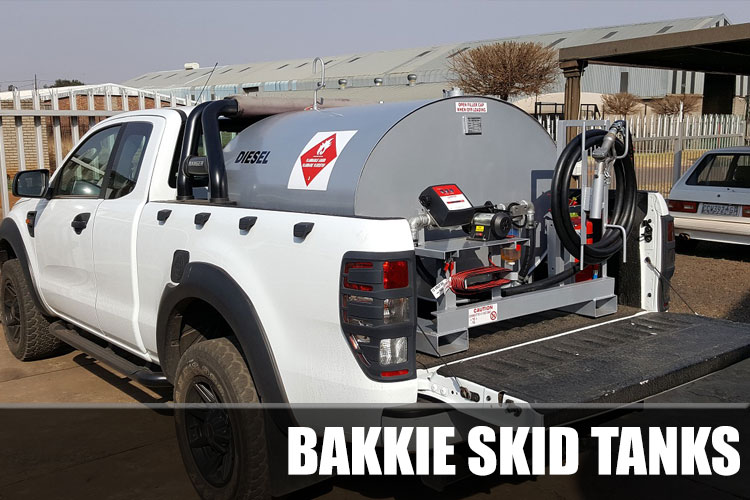
A smaller mobile unit can suit lighter consumption, restricted access or a tow vehicle with lower capacity. M&M Fabrication’s bakkie skid tank range provides another format for operations that want a removable tank carried on a suitable load bed. The vehicle’s payload and secure mounting remain central considerations.
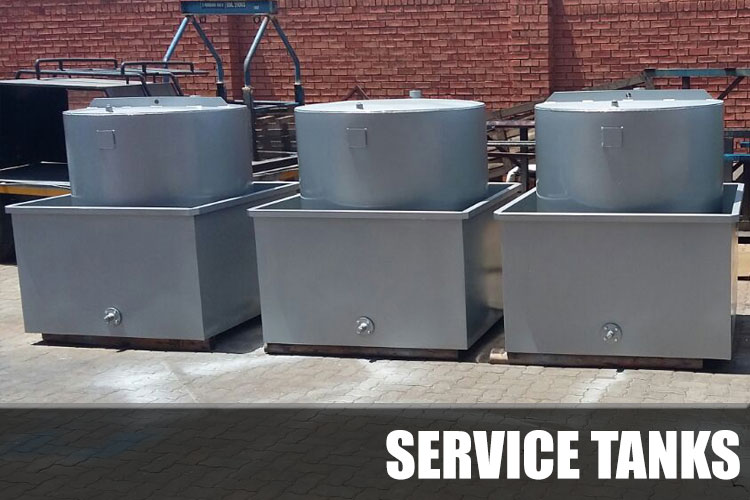
For a workshop or service vehicle carrying fuel, lubricants or other service fluids, purpose-designed service tanks may offer a more appropriate layout. A stationary or larger bulk arrangement can be more efficient where fuel is delivered to one fixed depot and machinery returns there to fill.
The decision comes down to fuel consumption, mobility and logistics. A 2 000-litre trailer makes sense where the volume provides a useful operating window and the loaded unit can be transported safely. Buying too large increases towing demands and leaves fuel standing for longer. Buying too small creates repeated refill trips and lost working time.
Information needed for an accurate quotation
A useful quotation starts with a clear operating brief. Giving the manufacturer only a tank capacity can lead to assumptions about the pump, chassis and accessories.
Prepare the following details:
- Fuel type: confirm that the unit is for diesel and identify any site-specific fuel requirements.
- Operating environment: explain whether it will work on public roads, farms, mines, construction sites, industrial yards or a combination.
- Tow vehicle: supply the vehicle details and the relevant towing limitations.
- Typical journey: describe road surfaces, distances, gradients and access restrictions.
- Dispensing demand: estimate the number and type of machines filled per shift.
- Power preference: state the available electrical supply or whether a manual arrangement is needed.
- Hose and nozzle needs: provide the required reach and receiving-equipment details.
- Fuel records: explain whether internal metering is required.
- Security: describe where the trailer will be stored and what needs to be locked or protected.
- Compliance process: identify any customer, insurer, site or procurement specifications that the build must take into account.
Ask for the proposed scope in writing. Check what is included, what remains optional and which responsibilities sit with the buyer after delivery. Clarify registration or licensing arrangements, documentation, operator preparation and ongoing component maintenance before accepting the quotation.
Inspection and maintenance after purchase
A diesel bowser requires routine checks like any working trailer. Before use, inspect the coupling, safety connections, tyres, wheel condition, lights, brakes, jockey wheel and visible chassis components. Look for leaks, damaged hoses, loose fittings and signs that valves or the pump have been struck.
Tyre pressure and condition deserve particular attention because the trailer can spend long periods parked and then be expected to carry a heavy load. Follow the applicable manufacturer instructions for wheel fasteners, bearings, braking components, pumps, filters, meters and hoses.
Keep the tank filling area clean and prevent water or dirt from entering through open caps and fittings. Investigate contamination instead of repeatedly replacing filters without finding the source. Any leak, structural damage or unusual towing behaviour calls for the trailer to be taken out of service until it has been assessed by a competent person.
Maintenance records help supervisors track recurring faults and demonstrate that inspections are being completed. Operators also need a simple reporting process so defects are not ignored during a busy shift.
Common buying mistakes
The most frequent mistake is selecting a bowser by litre capacity and price while overlooking the loaded mass and operating conditions. Other problems include choosing a pump without defining the workload, using an unnecessarily short hose, failing to plan secure overnight storage and assuming that one fuel trailer is suitable for every liquid.
Another mistake is treating compliance as a question to address after manufacture. Road use, site rules, insurer requirements and dangerous-goods obligations can influence the required specification. Raise them before the design is agreed.
Finally, avoid comparing quotations solely by their total amount. Check tank capacity, trailer ratings, brakes, tyres, dispensing components, accessories and the scope of supply. Two products described as 2 000-litre diesel trailers may be configured for very different duties.
Frequently asked questions
How heavy is a full 2 000-litre diesel trailer?
The diesel alone can weigh approximately 1 640 to 1 700 kilograms, depending on its density and temperature. The complete loaded mass also includes the tank, trailer chassis, pump, hose, fittings and accessories. Obtain the proposed trailer tare and rated mass from the manufacturer, then verify that the tow vehicle and all towing components are suitable.
Can a 2 000-litre diesel bowser travel on public roads?
It can only be used on public roads when the complete vehicle combination and operation meet the applicable South African requirements. Trailer registration, roadworthiness, brakes, mass limits, driver licensing and dangerous-goods duties may be relevant. Requirements vary by configuration and use, so confirm them with the appropriate authorities and qualified advisers before operation.
Can the same trailer carry diesel and petrol?
Do not assume that a diesel bowser is suitable for petrol. Petrol has different vapour and fire risks, and the tank, pump, electrical equipment, hose, nozzle and operating procedures need to be appropriate for the intended fuel. Specify the product at the start and avoid switching fuels without a competent technical assessment.
Request a 2000 litre diesel trailer quotation
M&M Fabrication manufactures water bowser trailers and fuel bowser trailers for South African applications. To price the right configuration, send the team your intended fuel, tow-vehicle details, operating route, dispensing requirements and preferred accessories.
Request a quotation from M&M Fabrication for a 2000 litre diesel trailer for sale, and discuss the tank, chassis and dispensing specification required for your operation.
