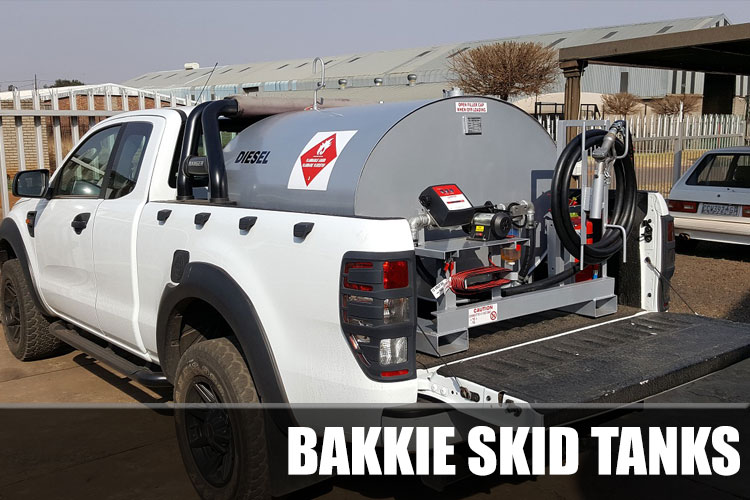
A bakkie sakkie tank for sale is usually a compact tank designed to fit securely into a bakkie load bin. Also called a bakkie skid tank, slip-on tank or load-bin tank, it provides a practical way to carry and dispense diesel, petrol or water at farms, construction sites, mines, workshops and remote work areas.
The right tank is not determined by capacity alone. Buyers need to consider the liquid being carried, the bakkie’s available payload, tank construction, mounting arrangement, dispensing equipment and applicable transport or storage requirements. A tank intended for water cannot automatically be used for fuel, and equipment designed for diesel is not necessarily suitable for petrol.
M&M Fabrication manufactures water bowser trailers and fuel bowser trailers in South Africa and offers bakkie skid tanks for sale for mobile on-site supply applications. This guide explains what to assess before requesting a quotation.
What is a bakkie sakkie tank?
A bakkie sakkie tank is a tank-and-frame assembly that sits inside or on the load area of a bakkie. Depending on its intended use and specification, the assembly can include a pump, delivery hose, nozzle, filler point, breather, protective frame and mounting points.
The word “sakkie” is commonly used in South Africa for a removable or slip-on unit carried by a bakkie. The more formal product description is generally bakkie skid tank. Buyers may also search for a bakkie fuel tank, mobile diesel tank, bakkie water tank or slip-on bowser.
Unlike a permanently built-in vehicle tank, a skid unit can be configured as a self-contained working assembly. Its removable nature can be useful where one bakkie performs several tasks, but removal and refitting must be planned carefully. The filled tank is heavy and requires suitable lifting equipment, secure attachment points and a stable handling procedure.
Choosing between a fuel tank and a water tank
The first question is what liquid the tank will carry. Tank materials, seals, pumps, hoses, vents and nozzles must all be compatible with that product. “Liquid tank” is not a sufficient specification.
Diesel bakkie tanks
A diesel bakkie tank can refuel generators, tractors, earthmoving equipment and other diesel-powered machinery away from a fixed fuel point. It can reduce unproductive trips between a work site and a filling station, particularly on large farms or projects where machinery cannot easily travel on public roads.
A typical dispensing setup could include a suitable fuel pump, delivery hose and nozzle. Pump flow, electrical supply and duty cycle need to suit the intended workload. Refuelling one small generator has different demands from servicing several machines during a shift.
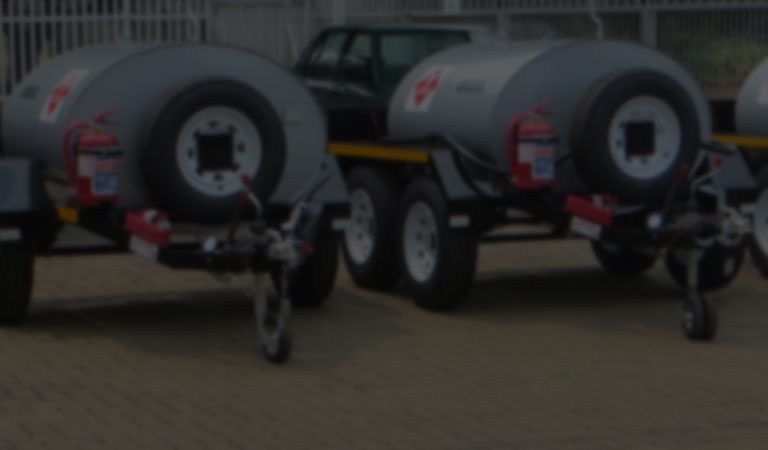
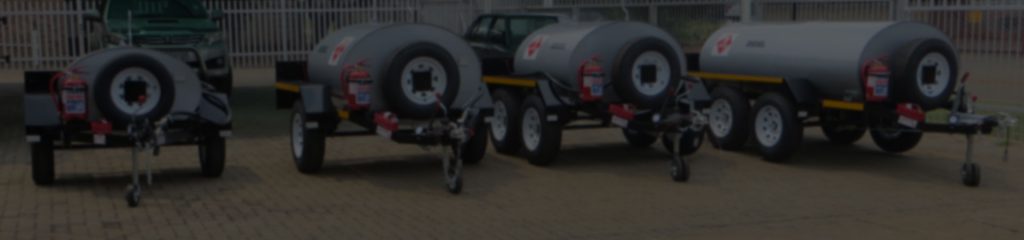
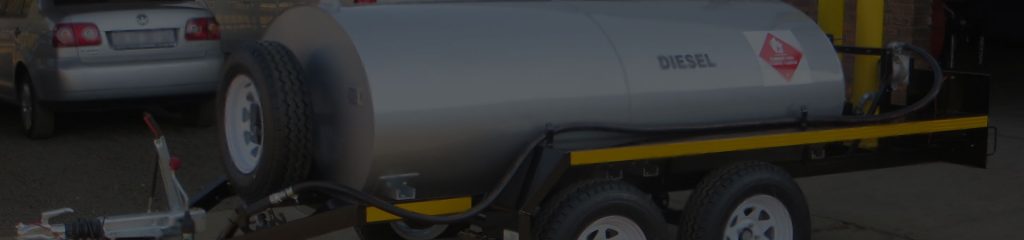
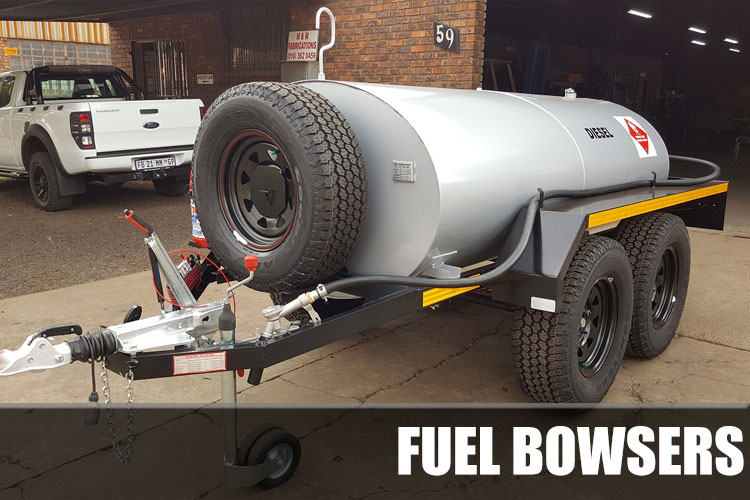
For larger requirements or operations that prefer a dedicated towable unit, view M&M Fabrication’s diesel and fuel bowser trailer range.
Petrol tanks need additional care
Petrol produces highly flammable vapour and cannot safely be treated as diesel. The tank, pump, hose, seals, nozzle, electrical components and static-control measures must be suitable for petrol service. A diesel pump must never be assumed to be petrol compatible.
Buyers planning to transport or dispense petrol need to state this clearly at quotation stage. The supplier can then assess the requested application and suitable component options. Fuel transport, workplace safety, fire protection and dangerous-goods obligations can vary according to quantity, vehicle, route and commercial use, so the operator must confirm the requirements that apply to the specific operation.
Water tanks for site and agricultural use
A bakkie water tank can carry non-potable water for dust suppression, plant watering, equipment cleaning or general site work. If the water is intended for human consumption, every wetted material and the way the tank is cleaned and operated require separate assessment. A tank suitable for construction water must not automatically be represented as a drinking-water system.
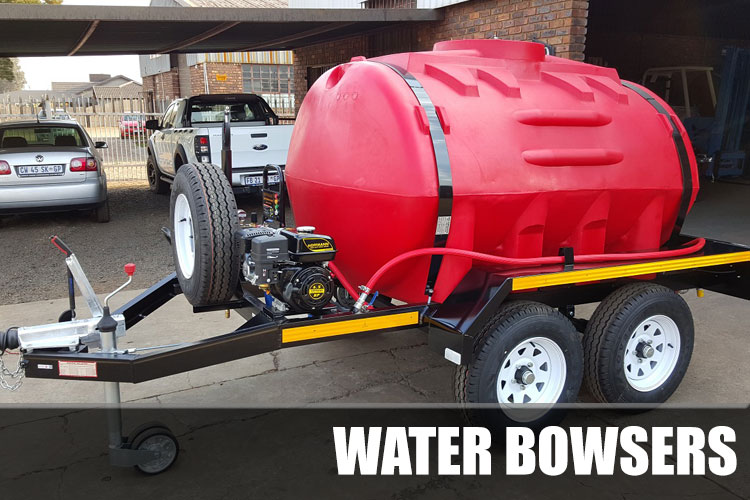
Water weighs approximately one kilogram per litre, before the mass of the tank, frame, pump and accessories is added. This makes payload planning especially important. For higher volumes, a dedicated water bowser trailer may provide a more appropriate platform than placing the full load on a bakkie.
How to select the right bakkie sakkie tank for sale
A useful quotation starts with the application, not a vague request for the biggest tank that will fit. Provide the following information to the manufacturer so the complete system can be considered.
- Liquid: State the exact fuel grade or describe the intended water use.
- Required volume: Estimate daily consumption, refill frequency and the distance to the supply point.
- Vehicle details: Include the bakkie make, model, year, load-bin dimensions and payload information.
- Dispensing task: Explain what will be filled, how often and the practical hose reach required.
- Power source: Identify the available electrical supply or ask about suitable pumping arrangements.
- Installation preference: Confirm if the tank will remain fitted or needs to be removed regularly.
- Operating environment: Mention gravel roads, farm use, mines, construction sites, dust or exposure to weather.
This information helps distinguish a basic transport requirement from a complete mobile dispensing system.
Calculate vehicle payload before choosing capacity
Load-bin dimensions tell you whether a tank physically fits. They do not confirm that the vehicle can legally or safely carry it.
Start with the bakkie’s permissible payload and account for every item added to the vehicle. This includes the tank, liquid, skid frame, pump, hose, nozzle, tools, passengers and any other cargo. Vehicle accessories such as canopies, tow bars and additional equipment also consume available carrying capacity.
As a practical guide, water is about 1 kg per litre. Diesel is commonly around 0.82 to 0.85 kg per litre, while petrol is lighter, although exact density varies with product specification and temperature. A nominal 500-litre water load therefore contributes about 500 kg before the empty tank and equipment are counted.
Load distribution matters as much as total mass. Poor placement can overload an axle even where the vehicle’s overall mass appears acceptable. It can also affect steering, braking and stability. Use the vehicle manufacturer’s limits and obtain technical input if axle loading or mounting position is uncertain.
Overloading is not solved by fitting stronger rear springs. Suspension changes do not automatically increase the manufacturer’s rated axle or gross vehicle mass limits.
Tank construction and mounting details to inspect
A bakkie tank operates in a demanding environment. Road vibration, corrugations, braking forces and repeated filling cycles place stress on the tank, frame and attachment points. Ask how the complete assembly is intended to be mounted and used.
A stable skid frame
The skid frame supports the tank and provides a base for mounting it to the vehicle. It needs to keep the load stable during normal driving and operation. Simply placing a filled tank in the load bin without an engineered restraint arrangement is unsafe.
Mounting points must suit the vehicle and the expected forces. The bakkie’s sheet-metal load bed must not be treated as an unlimited structural anchor. Installation planning should consider the vehicle structure, access for fastening, load distribution and the need for inspection.
Baffles and liquid movement
Liquid moves as a vehicle accelerates, corners and brakes. Internal baffles can help control surge, but their design depends on tank shape and intended application. Ask the manufacturer how liquid movement is addressed, especially for a relatively large tank used on uneven roads.
Filler, vent and outlet positioning
The filler must be accessible without requiring unsafe climbing or awkward handling. Venting needs to suit the tank and liquid, while the outlet and pump position should be protected from accidental impact. Hoses should be stored so they do not drag on the road, collect unnecessary dirt or become trapped by other cargo.
Corrosion protection and maintenance access
Exterior coatings and material selection need to match expected exposure. Coastal conditions, fertiliser, fuel spills, water and abrasive dust can affect service life. Components that require inspection or replacement should remain accessible after installation.
Selecting the pump, hose and nozzle
The dispensing system affects how useful the tank is in daily work. A pump selected only by advertised flow rate can disappoint if the hose is long, the power supply is inadequate or the liquid is incompatible with the pump.
Discuss the required flow, delivery height, hose length, power source and frequency of use. A high-volume pump is not always the best choice for filling small equipment. Controlled delivery can reduce splashing and make it easier to avoid overfilling.
All wetted components must suit the liquid. This includes seals and internal pump materials, not merely the visible hose and nozzle. For fuel systems, electrical connections and component suitability need particular attention. Do not replace specified parts with general-purpose hardware simply because the fittings appear to match.
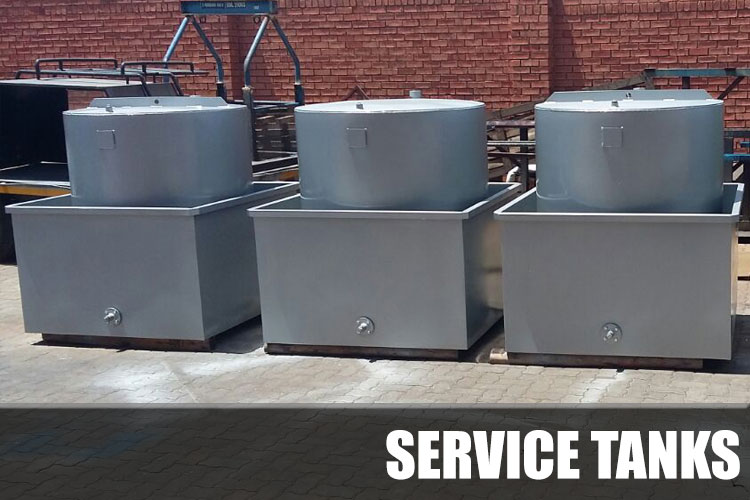
Buyers who need a vehicle-mounted tank for maintenance fluids or field servicing can also review M&M Fabrication’s service tank options. Where specialised aviation fuel transport is involved, use equipment designed for that application and consult the Avgas trailer range rather than adapting an ordinary fuel tank.
Bakkie tank or bowser trailer: which is more practical?
A bakkie-mounted tank is compact, manoeuvrable and does not require towing. It can suit smaller deliveries, mobile maintenance teams and sites where trailer access is restricted. Gauteng construction sites and industrial yards often have tight access, parked machinery and busy internal roads, making vehicle footprint an important practical consideration.
The trade-off is that the tank uses the bakkie’s payload and load space. It remains on the vehicle unless suitable equipment is available to remove it, and tank capacity is limited by the vehicle’s mass and dimensional constraints.
A bowser trailer places the load on a dedicated chassis and can free the bakkie load bin for tools or other materials. It may suit higher-volume supply, frequent deployment or an operation where the unit needs to remain on site while the towing vehicle leaves. Trailer licensing, towing capacity, brakes, manoeuvring space and storage must then be considered.
A skid tank is generally the better candidate where compactness and access are priorities. A trailer often makes more sense where greater volume, site independence and preservation of vehicle payload are more valuable.
Safe operation and legal responsibilities
Fuel is a hazardous product, and even water creates a substantial moving load. The owner and operator remain responsible for using the equipment correctly and complying with applicable road, workplace, environmental, municipal, fire-safety and dangerous-goods requirements.
Requirements can change according to the substance, quantity, vehicle classification and nature of the operation. Commercial transport on public roads can attract obligations that differ from movement within a private farm or controlled work site. Obtain advice relevant to the actual use instead of relying on a general online summary.
Practical operating controls include:
- Inspecting the tank, mounts, hoses, fittings and nozzle before use.
- Checking for corrosion, chafing, loose fasteners or signs of leakage.
- Keeping ignition sources away from fuel filling and dispensing areas.
- Using the correct shutdown and spill-response procedure for the product.
- Training operators to dispense the liquid and isolate the pump safely.
- Keeping the tank closed and secured during transport.
- Stopping operation immediately if a leak or damaged component is found.
Gauteng’s dry winter conditions can increase veld-fire exposure around farms, open land and work sites. Fuel dispensing areas should be kept clear of combustible material, and site-specific fire controls need to be available. For mobile water-based fire-response applications, M&M Fabrication also offers fire-fighting trailers. These units are application-specific and should not be confused with an ordinary water transport tank.
Common buying mistakes to avoid
- Choosing capacity before checking payload. A tank that fits between the wheel arches can still overload the bakkie once filled.
- Failing to identify the liquid. Diesel, petrol, water and aviation fuels have different compatibility and safety requirements.
- Ignoring the empty equipment mass. The tank, frame, pump and accessories all reduce the available payload.
- Using straps or mounting points without proper assessment. A full tank needs a secure restraint system designed for vehicle movement.
- Buying on pump flow alone. Compatibility, power demand, duty cycle and delivery conditions are equally relevant.
- Assuming a removable tank is easy to lift manually. Even an empty steel assembly can require mechanical lifting equipment and a planned procedure.
- Converting a water tank into a fuel tank. Materials, vents, fittings and dispensing equipment may not be suitable or safe.
- Neglecting inspection access. Mounts, hoses and fittings need to remain visible enough for routine checks.
Information to include in your quotation request
Before asking for a bakkie sakkie tank price, prepare a concise specification. Include the required liquid, preferred volume, bakkie details, load-bin measurements, intended pump power source, hose length and expected daily use. Mention if the vehicle travels on public roads and describe difficult operating conditions such as gravel roads, steep terrain or dusty sites.
If you are uncertain about the correct format, explain the job instead of selecting components yourself. For example: “We need to refuel two diesel generators at separate points on a construction site each day.” That gives the manufacturer more useful information than asking only for a 500-litre tank and pump.
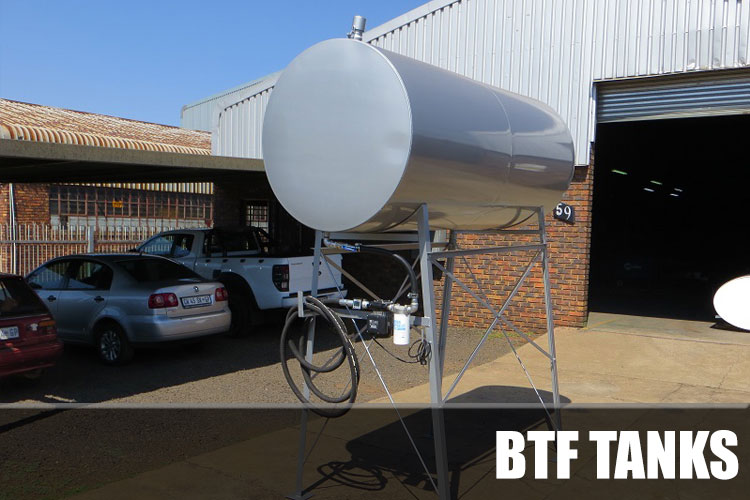
Some operations may be better served by a different tank format. M&M Fabrication’s BTF tank range provides another product category to discuss where a standard bakkie skid arrangement does not match the application.
Frequently asked questions
Can a bakkie sakkie tank carry both diesel and water?
A tank should be specified for its intended liquid. Switching between fuel and water creates contamination, compatibility and cleaning concerns. Never use a former fuel tank for drinking water, and do not put fuel into a water tank unless the manufacturer has expressly confirmed that the complete system is suitable for that product.
What size tank can my bakkie carry?
The safe capacity depends on the bakkie’s payload, axle limits, existing accessories, passenger load, tank mass and liquid density. Measure the load bin, but also calculate the complete filled mass. Consult the vehicle information and obtain technical advice where the loading position or axle distribution is unclear.
Is a bakkie skid tank better than a fuel trailer?
A skid tank is compact and useful where towing is inconvenient or access is restricted. A trailer can preserve load-bin space and may suit larger volumes or a unit that must remain at the work site. The correct choice depends on volume, vehicle capacity, site access and operating routine.
Request a bakkie sakkie tank quotation from M&M Fabrication
A well-specified mobile tank gives your team a practical way to move and dispense fuel or water, but the tank must match the liquid, vehicle and daily task. Capacity, compatibility, mounting and payload need to be assessed as one system.
Contact M&M Fabrication with your bakkie model, required liquid, preferred capacity and dispensing requirements. The team can discuss a suitable bakkie skid tank or advise if a bowser trailer would be more appropriate. Request a quotation for a bakkie sakkie tank for sale and provide your application details for an informed response.