If you plan to buy a double-axle diesel trailer, start with the work it must perform rather than choosing on tank capacity alone. The right trailer must carry the required volume safely, remain within the tow vehicle’s rated limits and provide a dispensing system suited to your machinery, vehicles and operating environment.
Also known as a tandem-axle diesel bowser, this type of trailer gives farms, construction companies, mines, plant-hire businesses and fleet operators a mobile refuelling point. It can reduce trips to a fixed fuel store and allow equipment to be refuelled closer to where it is working. Those benefits, however, depend on selecting the correct tank, chassis, braking system, pump and fittings.
This guide explains the main specifications to assess before requesting a quotation from a South African manufacturer.
What is a double-axle diesel trailer?
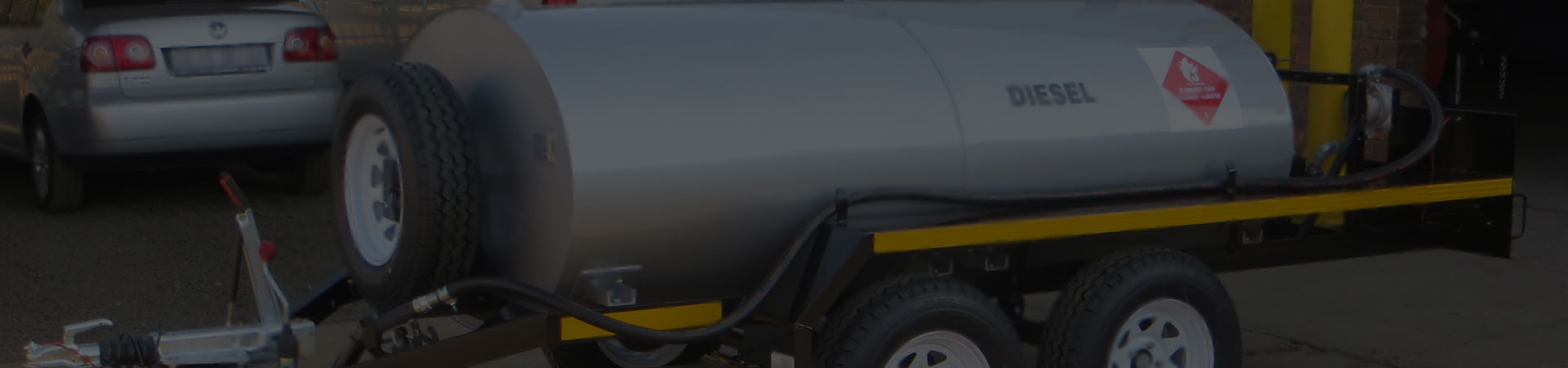
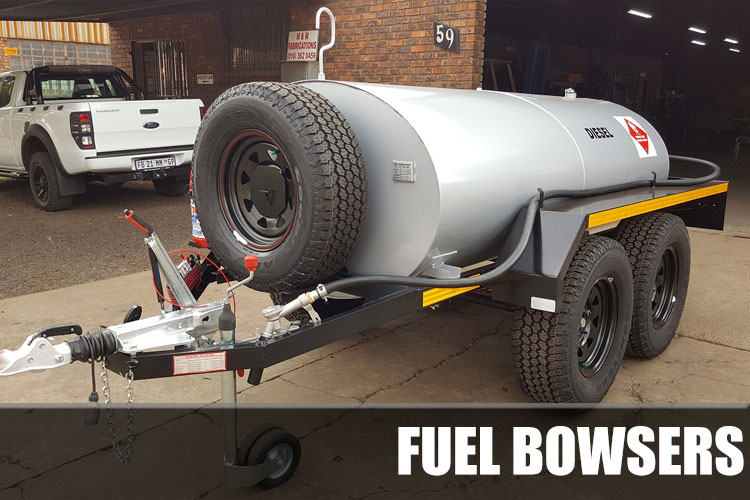
A double-axle diesel trailer is a towable fuel tank mounted on a chassis with two axles. The axles are positioned close together, which is why the configuration is also described as tandem axle. The trailer normally includes a diesel tank, drawbar, coupling, road wheels and a system for filling and dispensing fuel.
Depending on its intended use, a diesel bowser can incorporate a pump, delivery hose, nozzle, filtration equipment, vents, level indication and secure storage for dispensing components. The exact configuration matters. A trailer used to refuel tractors on a farm has different operating demands from one travelling regularly between construction projects.
Two axles do not automatically make a fuel trailer suitable for every load or road. Its complete design, axle ratings, tyres, coupling, brakes, chassis and loaded mass all need to work together.
When does a tandem-axle diesel bowser make sense?
A double-axle configuration is generally considered where the required fuel volume and loaded mass are beyond what is practical for a smaller single-axle trailer. It can also suit operations that value load distribution and stability across uneven working areas.
Common applications include:
- Refuelling tractors, harvesters and irrigation equipment on farms
- Supplying excavators, loaders, graders and generators on construction sites
- Supporting plant and service vehicles in mining and quarry operations
- Refuelling forestry or land-clearing equipment away from a depot
- Providing mobile diesel capacity for fleet, industrial and municipal work
In Gauteng, many operators need to move fuel between depots, industrial areas and active sites while dealing with busy roads and congested access routes. A compact, properly specified mobile bowser can be more practical than sending individual machines back to a fuel point. On Highveld construction and agricultural sites, dust also makes secure caps and suitable fuel filtration worth discussing with the manufacturer.
Start with the required fuel capacity
Capacity is often the first specification buyers compare, but the largest available tank is not necessarily the best choice. Estimate how much diesel your equipment consumes between planned fuel deliveries, then add a reasonable operational allowance. Avoid buying unused capacity that creates unnecessary weight and cost.
Consider the following questions:
- How many machines or vehicles will the trailer refuel?
- What is their combined daily diesel consumption?
- How far is the worksite from the main fuel source?
- How often can the bowser be replenished?
- Will the trailer usually travel full, partly full or empty?
- Are there narrow gates, tight turning areas or steep access roads?
Diesel has substantial mass, so tank volume directly affects the trailer’s payload and total loaded weight. The calculation must include the fuel, tank, chassis, pump, hoses, spare wheel and any fitted accessories. Ask for the trailer’s tare, payload and gross vehicle mass information instead of judging suitability from litres alone.
Check the tow vehicle before buying the trailer
The tow vehicle determines what can be moved legally and safely. Its towing capacity, permissible trailer mass, coupling rating and braking requirements must be checked against the completed diesel trailer, not an empty chassis.
Review the vehicle manufacturer’s documentation and its identification plates. Pay attention to both braked and unbraked towing limits, as these can differ significantly. The trailer’s loaded mass must remain within the applicable limits, and the coupling fitted to the tow vehicle must carry an appropriate rating.
Drawbar loading also affects handling. Too little load at the coupling can contribute to instability, while excessive load can overload the rear of the tow vehicle. Tank position, axle placement and equipment layout therefore form part of the engineering decision. They are not cosmetic choices.
If different vehicles will tow the trailer, provide the manufacturer with details of the least capable vehicle as well as the vehicle used most often. This helps prevent a situation where a trailer is suitable for one bakkie or truck but unsafe for another.
What to inspect on a double-axle diesel trailer
Tank construction and support
The tank must be designed for its intended fuel and mounted securely to the trailer chassis. Ask about the tank material, fabrication method, internal support where applicable and how the mounting system accommodates the stresses of towing.
Liquid moves as a trailer accelerates, brakes and turns. This surge can affect handling, especially when a tank is partly full. The manufacturer should account for liquid movement through the tank design and its internal configuration where required. Do not assume that any general-purpose tank can be placed on a trailer and used as a road-going diesel bowser.
Chassis, axles and suspension
Check that the combined axle capacity is appropriate for the trailer’s maximum loaded mass. The frame, drawbar, hubs, bearings, springs, tyres and wheels must also be selected as a complete system. Two axles with an impressive combined rating do not compensate for an under-specified chassis or coupling.
Ask whether the trailer is intended mainly for surfaced roads, maintained gravel roads or controlled off-road sites. Harsh off-road use places different demands on the frame and suspension. A road trailer is not automatically suitable for being pulled fully loaded over rutted ground.
Braking equipment
A loaded tandem-axle fuel bowser can be heavy enough to require a suitable braking system. The correct setup depends on the trailer’s mass, design, tow vehicle and intended operating conditions. Discuss service braking, parking control and any breakaway provisions with the manufacturer.
Never select brakes only as an optional convenience. They affect stopping distance, control on descents and the load placed on the tow vehicle. Confirm how the proposed system operates and what maintenance it requires.
Tyres, wheels and spare-wheel provision
Tyres must have adequate load and speed ratings for the completed trailer. All four tyres share the load, but uneven loading, poor inflation or mismatched tyres can still cause overheating and handling problems. Ask for the recommended cold inflation pressure and follow the tyre and trailer manufacturer’s guidance.
A spare wheel is especially useful where the bowser operates far from a workshop. It needs a secure mounting point that does not obstruct the pump, hose or inspection access.
Coupling, jockey wheel and safety connections
The coupling must match the towing arrangement and carry the required rating. Check the drawbar, safety connections, electrical plug and jockey wheel at the same time. Operators need to be able to hitch, unhitch and park the trailer on firm, level ground without improvising unsafe supports.
Choose a dispensing system for the actual job
A pump that looks adequate on paper can become a daily frustration if it is too slow, incompatible with the available power source or difficult to maintain. Explain how the bowser will be used before choosing a pumping system.
Useful points to confirm include:
- The pump’s compatibility with diesel
- The required power source and electrical connections
- The expected delivery rate under realistic operating conditions
- Hose length and storage
- Nozzle type and shut-off arrangement
- Filter placement and replacement requirements
- Metering needs, if fuel usage must be recorded
- Protection against unauthorised access
A longer hose can improve access to large machinery, but it also needs orderly storage and protection from dragging, kinking and vehicle traffic. Filtration can help protect the fuel system from particles introduced during filling or field operation, although filters still require inspection and replacement.
If your operation needs petrol, aviation fuel or another product, state that clearly. A diesel trailer must not simply be repurposed for a different fuel without confirming tank, pump, hose, seal and safety compatibility. M&M Fabrication provides a broader range of diesel bowsers and fuel trailers, and specialised requirements can be discussed before manufacture. Aviation operators can separately review the Avgas trailer range.
Road use, site use and South African compliance
Tell the manufacturer whether the trailer will be used on public roads, only within a private site or in both environments. Registration, licensing, roadworthiness, lighting, braking, marking and mass requirements can depend on the trailer’s specification and use.
South African road and dangerous-goods requirements can also be affected by the quantity transported, the nature of the journey and the parties involved. Do not rely on a generic online checklist. Confirm the current requirements that apply to your operation with the relevant licensing authority, insurer, safety adviser and other competent parties.
Site rules can be stricter than basic road requirements. Mines, industrial facilities and large construction projects may impose their own controls for access, driver training, fire equipment, fuel transfer and spill response. Obtain those rules before approving the trailer specification. Retrofitting equipment later is often less convenient than incorporating suitable mounting and storage points during manufacture.
Plan for safe diesel filling and dispensing
A well-built trailer still relies on disciplined operation. Diesel must be filled and dispensed in a controlled area away from ignition sources and unnecessary traffic. The trailer needs to be stable, correctly parked and protected against accidental movement.
A practical operating procedure can cover:
- Inspecting the tank, tyres, coupling, hoses and visible fittings before use
- Confirming that the correct fuel is being loaded or dispensed
- Positioning the trailer on suitable ground and applying its parking controls
- Stopping machinery where required before refuelling
- Keeping the operator at the nozzle during transfer
- Preventing overfilling and allowing for safe tank operation
- Closing caps and valves before moving the trailer
- Recording faults, leaks or damaged components immediately
Operators also need an appropriate response plan for spills and fire. The required equipment and procedure depend on the workplace and risk assessment. Diesel spills must not be washed into soil, stormwater systems or drains. Damaged hoses, valves and electrical equipment need proper repair before the bowser returns to service.
Maintenance affects reliability and fuel quality
Fuel trailers work in dust, rain, vibration and changing temperatures. A simple inspection routine helps identify problems before they cause downtime or fuel loss.
Before towing, check tyre condition and pressure, wheel security, lights, coupling engagement, safety connections, brakes and visible leaks. Inspect the pump, nozzle, hose and filter according to their service requirements. Wheel bearings, suspension components and the chassis also need periodic attention based on distance, operating conditions and manufacturer guidance.
Water and contamination can damage diesel-powered machinery. Keep filling points closed when not in use, protect the hose and nozzle from dirt, and investigate any sign of water or debris in the fuel. If the tank requires cleaning, use a safe process suitable for fuel equipment. Welding, grinding or other hot work on a tank that has contained fuel requires specialist controls and must never be treated as an ordinary repair.
Double-axle trailer or another fuel-storage format?
A tandem-axle bowser is not the only way to transport or position diesel. The best format depends on mobility, volume and the vehicles already available in your operation.
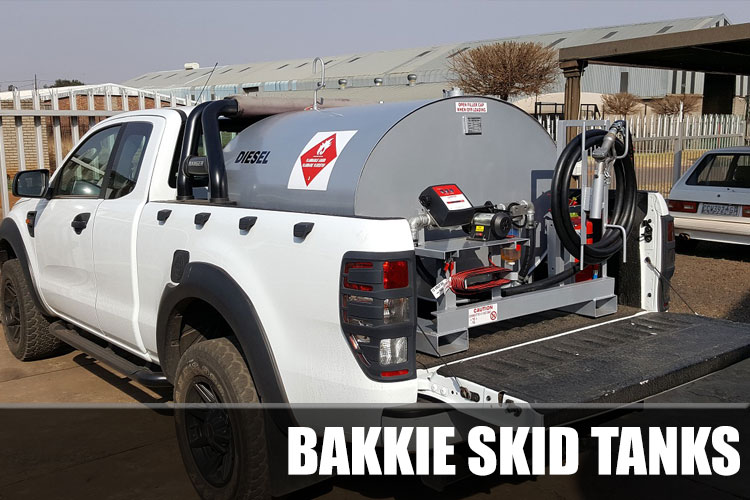
A smaller trailer can suit lower consumption and tighter access, provided its capacity and loaded mass remain appropriate. A vehicle-mounted solution can be useful where operators need fuel carried on a bakkie instead of towing. M&M Fabrication’s bakkie skid tanks are relevant for buyers comparing these formats.
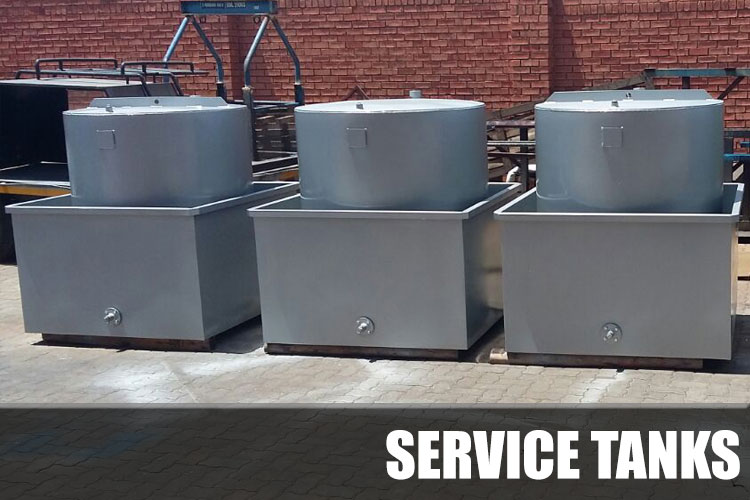
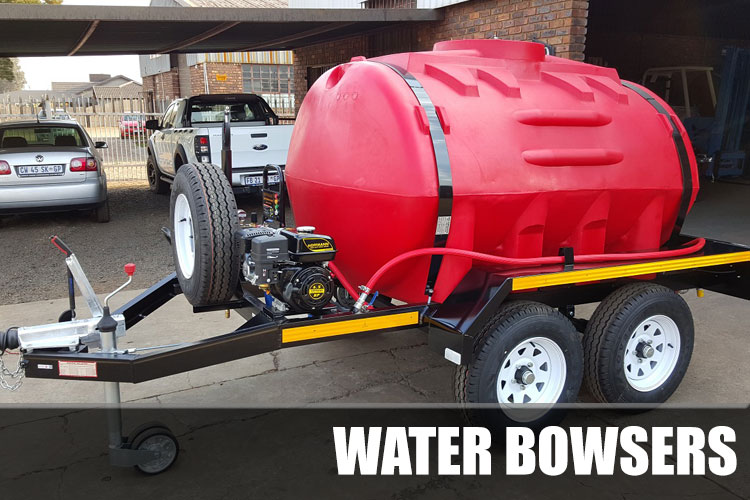
For service vehicles carrying fuel alongside tools or maintenance equipment, purpose-designed service tanks may offer a better fit. Fixed or site-based applications can call for a different tank configuration altogether. If the operation also transports water, use a dedicated product from the water bowser range; a diesel tank and a water tank are not interchangeable simply because their capacities appear similar.
Information to include in your quotation request
A detailed enquiry allows the manufacturer to propose a more relevant configuration. Before requesting a price, prepare the following information:
- Required diesel capacity or estimated daily consumption
- Tow vehicle make, model and rated towing capacity
- Public-road, private-site or mixed use
- Typical road and terrain conditions
- Preferred pump power source
- Desired hose length, filtration and metering
- Types of machinery being refuelled
- Security or lockable-storage requirements
- Any project, mine or site-specific rules
- Delivery location and expected operating area
Ask the supplier to define what is included in the quoted scope. Confirm the tank, chassis, axles, braking arrangement, wheels, tyres, coupling, pump, hose, nozzle, filter, electrical equipment and optional accessories. This gives you a better comparison than looking at the headline price alone.
Common buying mistakes to avoid
The most common error is selecting a bowser by litre capacity without checking its total loaded mass. Other costly mistakes include assuming every bakkie can tow the trailer, overlooking brakes, choosing a pump without considering the power supply and failing to disclose rough-site use.
Buyers also sometimes focus on road travel but forget what happens at the destination. A long trailer may struggle in a congested yard, while low ground clearance can be unsuitable for uneven farm tracks. Conversely, an off-road appearance does not prove that a trailer is designed for continuous severe terrain.
Lastly, do not treat diesel and petrol handling as identical. Fuel compatibility must extend to the tank, pump, seals, hose, nozzle and operating controls.
Frequently asked questions
Is a double-axle diesel trailer more stable than a single-axle trailer?
A well-designed tandem-axle trailer can distribute its load across two axles and may offer advantages for larger capacities. Stability still depends on correct loading, tyre condition, drawbar load, speed, suspension, tank design and tow vehicle suitability. Two axles cannot correct poor design or unsafe operation.
Can I tow a diesel bowser with a bakkie?
Only if the bakkie’s rated towing capacity, coupling and braking provisions suit the trailer at its full operating mass. Check the vehicle documentation and trailer specifications. An empty trailer being easy to tow does not mean it is suitable once filled with diesel.
What details determine the price of a double-axle diesel trailer?
Price is influenced by tank capacity, chassis and axle specification, braking equipment, pump type, hose and nozzle, filtration, metering, electrical components and optional storage or security features. Delivery requirements and specialised site specifications can also affect the quotation.
Request a double-axle diesel trailer quotation
M&M Fabrication manufactures water bowser trailers and fuel bowser trailers for South African applications. To discuss a double-axle diesel trailer, send the team your required capacity, tow vehicle details, operating terrain and dispensing needs.
Request a diesel trailer quotation from M&M Fabrication and receive guidance on a configuration suited to your refuelling operation.