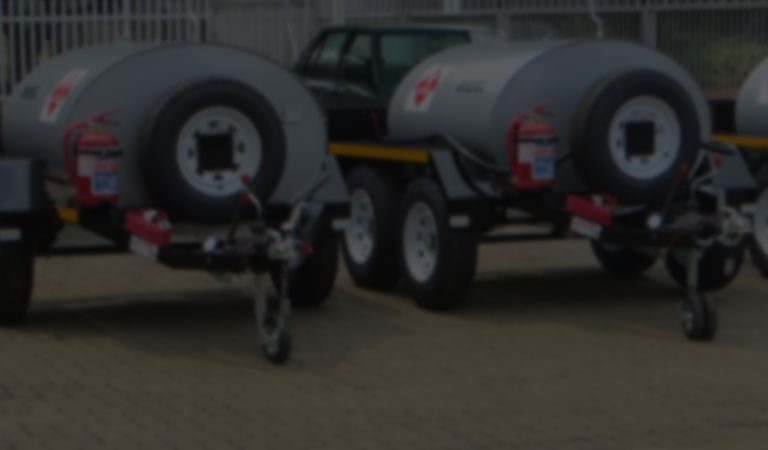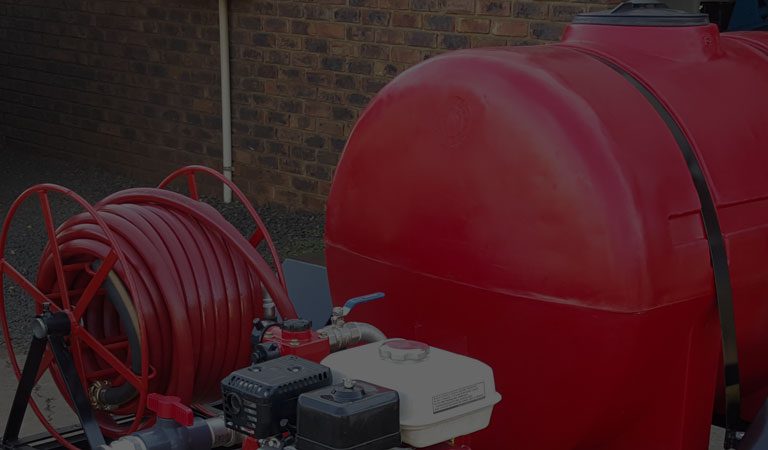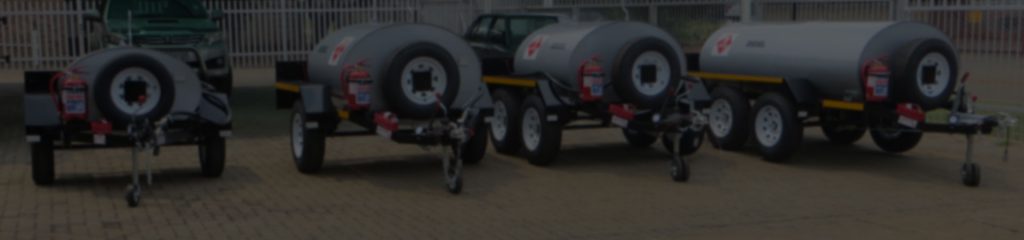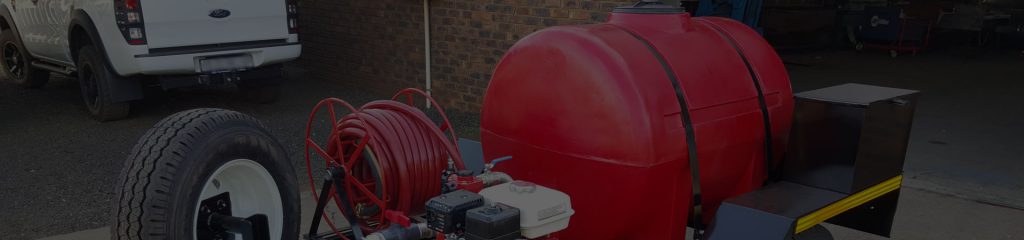
If you want to buy a 2500 litre diesel bowser, tank capacity is only the starting point. The trailer’s intended use, loaded weight, pumping equipment, towing conditions and safety features all affect whether it will work reliably on your site.
A 2500 litre fuel bowser is typically suited to operations that need to refuel several machines without repeatedly returning to a fixed storage tank. Common users include farms, construction contractors, mining support operations, plant-hire businesses, civil engineering teams and companies running generators or other diesel-powered equipment.
M&M Fabrication manufactures water and fuel bowser trailers in South Africa. This guide explains what to consider before requesting a quotation, including trailer configuration, fuel-handling equipment and the practical implications of towing more than 2,000 litres of diesel.
What is a 2500 litre diesel bowser?
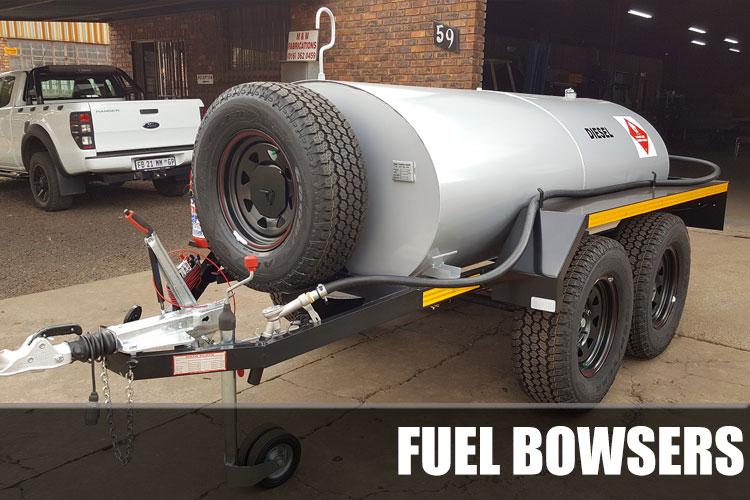
A 2500 litre diesel bowser is a mobile tank and dispensing system designed to transport and issue diesel where it is needed. The tank may be mounted on a road-going trailer or configured for controlled use within a farm, mine, construction site or other private operating area.
A complete bowser generally combines several components:
- A fabricated tank suitable for diesel
- A chassis and axle arrangement selected for the expected load
- A filling point and secure closure
- A venting arrangement
- A diesel-compatible pump
- A delivery hose and dispensing nozzle
- Valves and pipework
- Fenders, lights, couplings and brakes where required by the trailer configuration
- Protection for vulnerable pumping and dispensing components
The precise specification should be agreed with the manufacturer. A bowser intended to move slowly between fields has different requirements from one that will cover long distances on public roads.
Is a 2500 litre capacity right for your operation?
A 2500 litre bowser provides a useful balance between mobile fuel availability and overall trailer size. It may reduce downtime where several machines consume fuel throughout the day, but it is not automatically the best capacity for every business.
Start by estimating actual consumption. Record the number of machines, their average daily fuel use, the distance between the work area and the main fuel store, and how often the bowser can be replenished. Allow an operational margin rather than basing the decision on a single unusually busy or quiet day.
For example, a contractor running excavators, loaders and diesel generators may benefit from carrying enough fuel for a planned refuelling round. A smaller farm with one tractor and short travel distances may find a lower-capacity unit easier to tow and store. High-consumption sites may need a larger tank or more than one bowser to avoid creating another refuelling bottleneck.
Consider these questions before selecting the capacity:
- How many litres does the fleet use during a normal shift?
- How far must the fuel travel from storage to the equipment?
- Will the bowser be used on public roads or only on private property?
- What towing vehicles are available?
- Can those vehicles legally and safely handle the loaded trailer?
- Is access restricted by narrow gates, steep gradients or rough terrain?
- How quickly must each machine be refuelled?
- Where will the bowser be parked and secured?
If 2500 litres is not the ideal match, compare the available diesel bowser and fuel trailer range before committing to a particular size.
Calculate the loaded weight before buying
One of the most common purchasing mistakes is considering the empty trailer weight while overlooking the diesel payload. Diesel density varies with grade and temperature, but a practical planning range is approximately 0.82 to 0.85 kilograms per litre. On that basis, 2500 litres of diesel alone can weigh roughly 2,050 to 2,125 kilograms.
The tank, chassis, axles, pump, hose, spare wheel and other equipment must then be added. The resulting fully loaded mass determines the required axle capacity, tyres, braking system, coupling and suitable towing vehicle.
Ask for the trailer’s tare, rated capacity and gross vehicle mass information applicable to the proposed build. Confirm that your towing vehicle is rated for the complete loaded trailer, not merely for the diesel payload. Tow-ball or coupling limits and the permissible load imposed on the towing vehicle also need attention.
Road legality should not be assumed from appearance. Registration, roadworthiness, braking, lighting, driver and dangerous-goods obligations can depend on the trailer, vehicle combination, operating circumstances and applicable South African requirements. Buyers should verify their proposed use with the relevant authorities or a suitably qualified compliance adviser.
Road-going and site-only diesel bowsers are not the same
Tell the manufacturer exactly where the bowser will operate. A site-only unit may be designed for low-speed movement within controlled premises. A road-going fuel trailer must be specified for the demands of public-road travel and the relevant regulatory requirements.
Road-going use
A bowser travelling between projects may encounter high-speed roads, potholes, emergency braking and extended journeys. The specification must account for stability, braking, road lighting, tyres, coupling security and the loaded capacity of every structural and running component.
Fuel transport can also trigger obligations beyond ordinary trailer requirements. These may relate to documentation, placarding, fire equipment, driver training, vehicle equipment and operating procedures. The applicable duties should be confirmed for the quantity, route and business activity involved.
Private-site use
A bowser used only on a farm, mine or construction site still needs a suitable chassis and safe operating procedures. Rough ground, side slopes, mud, rocks and abrupt towing movements can place substantial loads on the trailer. Ground clearance, tyre choice and component protection may be more valuable than features intended mainly for normal road travel.
“Off-road” should not be interpreted as unrestricted. Operators need defined speed limits, approved routes and safe parking areas. The towing unit must remain capable of controlling the trailer on gradients and loose surfaces.
Tank design features worth discussing
A well-specified diesel tank needs to manage fuel movement, filling, dispensing and inspection. These details influence trailer stability and day-to-day usability.
Internal surge control
Liquid moves as a trailer accelerates, turns and brakes. This surge becomes especially noticeable when the tank is partially full. Appropriate internal baffles can reduce uncontrolled liquid movement and support more predictable handling. Ask how the tank design addresses surge for the intended operating conditions.
Filling, venting and drainage
The filling point should be accessible without encouraging operators to climb unsafely onto the trailer. It also needs a secure closure that helps prevent contamination and unauthorised access.
A tank must be vented appropriately so that fuel can be dispensed without creating an excessive vacuum and filled without unsafe pressure build-up. Any low-point drain or maintenance access should be positioned and protected to reduce accidental opening or impact damage.
Protection against contamination
Dirt and water can damage fuel systems and cause avoidable equipment downtime. Secure closures, clean transfer practices and suitable filtration help protect the fuel from the storage point to the machine.
If the bowser will operate in dusty Gauteng construction areas, agricultural fields or exposed mining environments, discuss how the pump, hose, filter and filling point will be protected while travelling and when the unit is parked.
Inspection and maintenance access
Filters, valves, hose connections, wheel bearings and braking components require periodic inspection. Equipment that cannot be reached easily is more likely to be neglected. The layout should allow routine checks without dismantling unrelated parts.
Select the right diesel dispensing equipment
The pump package should match the daily workload rather than simply being the cheapest available option. A bowser used occasionally to top up a generator has different requirements from one refuelling heavy plant throughout a shift.
Discuss the following points with the manufacturer:
- Pump power source: Options may include manual or electrically powered arrangements, depending on the required configuration.
- Flow requirement: Faster delivery can reduce refuelling time, but the pump, hose, filter and nozzle must work as a compatible system.
- Hose length: The hose must reach the equipment safely without being dragged through traffic routes or stretched across sharp edges.
- Nozzle type: The nozzle should be suitable for diesel and the intended dispensing method.
- Filtration: A correctly selected, serviceable filter helps limit contamination reaching machinery.
- Metering: A meter may assist with recording fuel issued, although it does not replace sound stock-control procedures.
- Component enclosure: Pumps and filters may need protection from weather, dust, theft and impact.
If you plan to power an electric pump from a towing vehicle or battery, confirm the electrical requirements, cable protection, isolation and charging arrangements. Electrical equipment around fuel must be selected and installed for the intended environment.
Safety and fuel-control considerations
Mobile refuelling combines vehicle movement, combustible liquid, heavy equipment and human activity. Safe equipment helps, but site procedures remain essential.
Refuelling should take place on stable ground away from ignition sources. Engines and equipment should be managed according to the relevant operating instructions and site rules. Smoking must be prohibited in the refuelling area. Operators need training in normal dispensing, spill response, emergency isolation and the correct use of available fire equipment.
Static control may also need to be addressed. Ask what bonding or earthing provisions are suitable for the bowser, pump and refuelling process. The correct approach depends on the equipment and operating environment.
A practical fuel-control system should cover:
- Authorised access to the bowser and dispensing equipment
- Opening and closing fuel measurements or reconciliations
- Machine, vehicle or operator identification
- Recorded quantities dispensed
- Reporting of leaks, spills and damaged components
- Secure overnight parking
- Scheduled filter, hose, tyre, bearing and brake inspections
Spill planning should account for the operating location and the volume being handled. Keep suitable response materials accessible and establish a clear escalation procedure. Environmental reporting and clean-up duties should be checked against applicable legislation and site requirements.
Do not use a diesel bowser for petrol without approval
Diesel and petrol present different handling risks. Petrol produces highly flammable vapours and may require different equipment, controls and compliance measures. A tank, pump or electrical system intended for diesel should not be assumed suitable for petrol.
Tell the manufacturer which fuel will be carried before the bowser is designed or quoted. Avoid changing products later unless the tank and complete dispensing system have been assessed and approved for that use. Cross-contamination can also damage engines and create costly operational problems.
Businesses handling aviation gasoline should use purpose-designed equipment and can review M&M Fabrication’s Avgas trailer options separately.
Compare a bowser trailer with other mobile tank formats
A trailer is useful where several towing vehicles may need to move the fuel supply or where the tank should be detached after delivery. It is not the only mobile option.
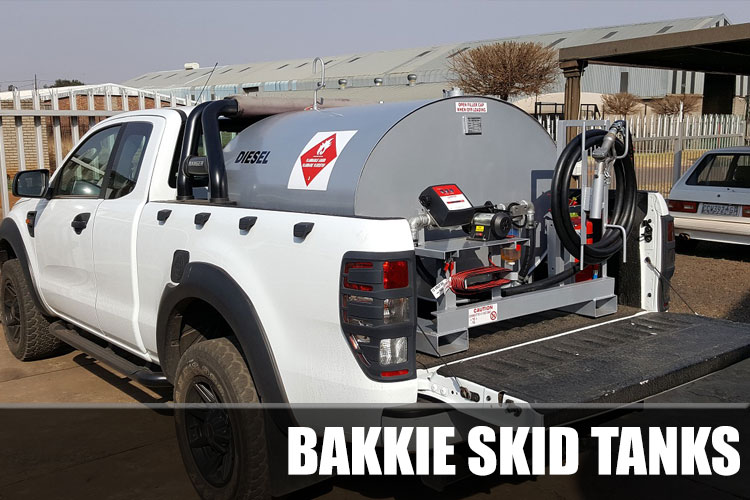
A skid tank carried on a suitable bakkie or load bed may be more convenient for smaller deliveries and tighter access. Payload limits, load restraint, vehicle stability and safe lifting remain critical. Buyers considering this format can compare bakkie skid tanks.
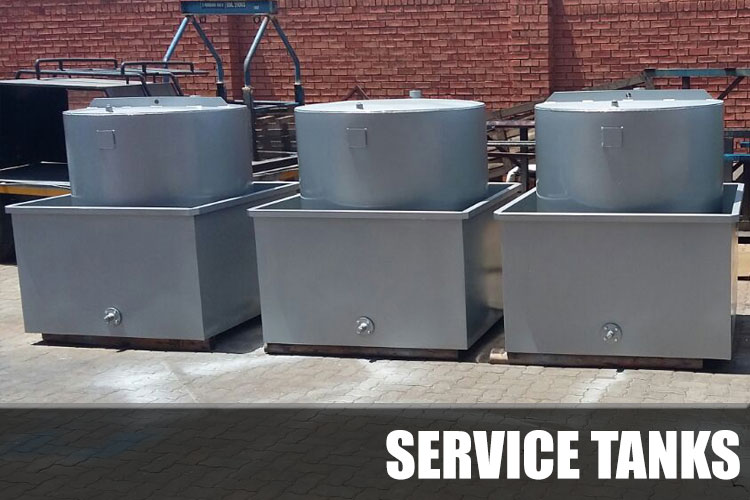
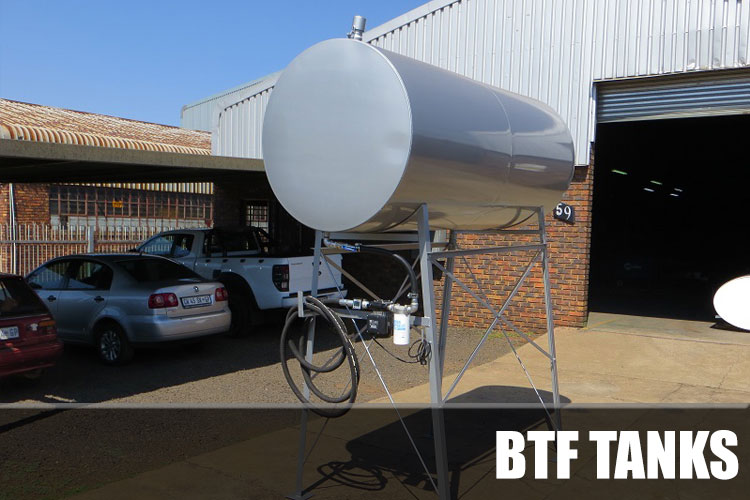
A service tank may suit operations needing a different installation or support-vehicle arrangement. M&M Fabrication also provides information on its service tank range.
Choose the format by examining how fuel enters the site, where it is stored, how it reaches each machine and what vehicle will transport it. The most useful solution is the one that removes handling steps without overloading the carrier or creating unsafe transfers.
Information to provide when requesting a quotation
A detailed enquiry helps a manufacturer propose a suitable unit and reduces revisions later. Do not send only the capacity and ask for a price. Provide the operating context as well.
- State that the required nominal capacity is 2500 litres.
- Confirm that the product is diesel and specify any known fuel grade or site requirement.
- Explain whether the bowser will travel on public roads, private sites or both.
- Describe the terrain, typical journey distance and expected towing speed.
- Provide details of the intended towing vehicle.
- Estimate how many machines will be refuelled each day.
- Describe the desired pump power source and dispensing rate.
- Specify hose reach, filtration, metering and security requirements.
- Identify site-specific rules or client specifications that the equipment must address.
- Ask what documentation and maintenance information will accompany the completed unit.
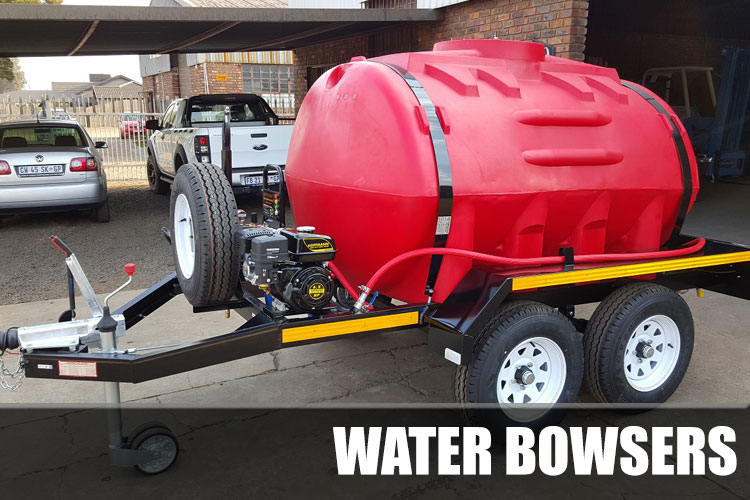
If you need water transport rather than fuel handling, use the separate water bowser trailer range. Water and diesel systems should not be treated as interchangeable merely because the tank capacities appear similar.
Questions to ask before placing an order
Use the quotation stage to confirm what is included and what remains the buyer’s responsibility. Useful questions include:
- What are the estimated tare and fully loaded masses?
- What axle, tyre, coupling and braking arrangement is proposed?
- How is liquid surge addressed?
- Is the quoted configuration intended for public-road or site-only use?
- Which pump, filter, hose and nozzle are included?
- How are dispensing components protected during travel?
- Which routine inspections and service intervals are recommended?
- What towing-vehicle information does the manufacturer require?
- Which optional items are excluded from the base quotation?
- What compliance checks must the buyer complete for the intended operation?
Compare quotations on complete specification, not capacity alone. A lower initial price can be misleading if essential braking, dispensing, filtration or protection features are excluded.
Frequently asked questions about 2500 litre diesel bowsers
How much does 2500 litres of diesel weigh?
Using an approximate density range of 0.82 to 0.85 kilograms per litre, the diesel may weigh about 2,050 to 2,125 kilograms. Actual density varies. The tank, trailer chassis and equipment must be added to calculate the complete loaded mass.
Can any bakkie tow a 2500 litre diesel bowser?
No. Suitability depends on the bowser’s fully loaded mass, the vehicle’s rated towing capacity, the coupling load, braking arrangement and operating conditions. Verify the specific vehicle and trailer combination before purchase or use.
Can a 2500 litre bowser be used on public roads?
That depends on its design, registration and compliance, as well as the towing vehicle and fuel-transport operation. Specify public-road use at the quotation stage and independently confirm all applicable South African requirements.
Should a diesel bowser have baffles?
Internal surge control is an important design consideration because liquid movement can affect trailer handling, particularly when the tank is partially filled. The appropriate baffle design should be determined by the manufacturer for the tank and intended use.
Is a fuel meter essential?
A meter is not necessary for every basic transfer task, but it can improve operational records and machine-level fuel allocation. Meter readings should form part of a wider control process rather than being treated as a complete stock-management system.
Can the same bowser carry diesel and water?
It is poor practice to switch casually between products. Residual fuel can contaminate water, while corrosion, seals, pumps and cleaning requirements may differ. Use equipment designed and dedicated to its intended liquid.
Request a 2500 litre diesel bowser quotation
The right bowser specification starts with the real job: how much fuel you issue, where the trailer will travel, what will tow it and how operators will dispense diesel safely. Establish those requirements before comparing prices.
M&M Fabrication manufactures fuel bowser trailers in South Africa and can discuss a configuration suited to your intended operating conditions. To buy a 2500 litre diesel bowser, send your towing, terrain, road-use and dispensing requirements through the M&M Fabrication quotation enquiry page. A detailed brief will help the team assess the appropriate tank, trailer and pump configuration for your application.